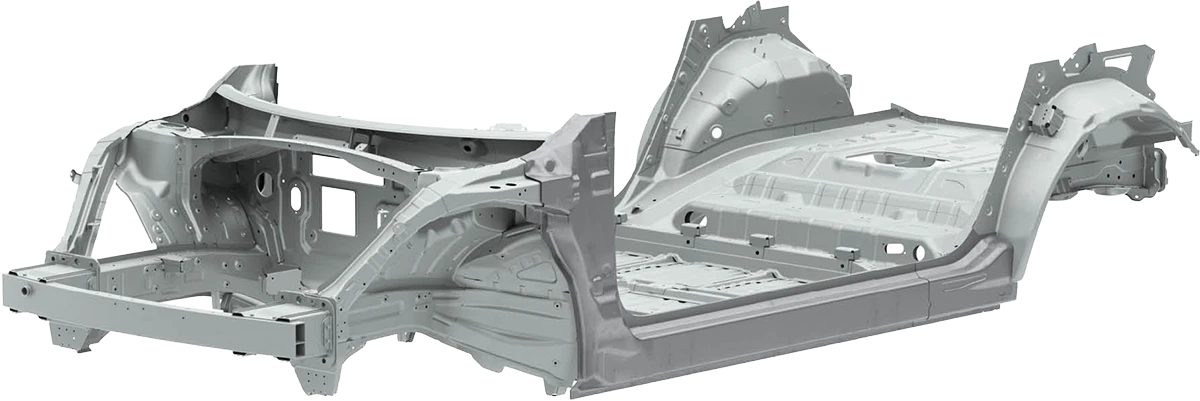
The E-GMP Platform
Why Hyundai, Kia, and Genesis got EVs right
While the rest of the automotive industry spent the early 2020s building EVs that couldn't quite get it all right — struggling with charging speeds, buggy software, shaky financials, perpetually-next-quarter timelines, or never fully committing to an electric future in the first place — Hyundai Motor Group quietly built an all-around solid EV platform for use across all their brands that did just about everything right.
A shared EV platform across multiple brands isn't a new idea — VW did it with MEB. But E-GMP is the one that actually works. It charges fast, drives well, looks distinct across three different brands, and produces cars people actually get excited about — not EVs they tolerate because they want to stop buying gas.
Here is how just about everyone else stumbled, and why I think E-GMP stands out. Warning: there are opinions ahead, so proceed at your own discretion. Also, these opinions are admittedly from a US (sorry) perspective about the US (sorry again) market. — Page written 2026/02/16
In 2021, Hyundai Motor Group launched not one but three vehicles on the E-GMP platform within months of each other — one from each brand. All three arrived as 2022 model year vehicles in the US. Three brands, three distinct identities, one platform. That had never been done this well in the EV space.
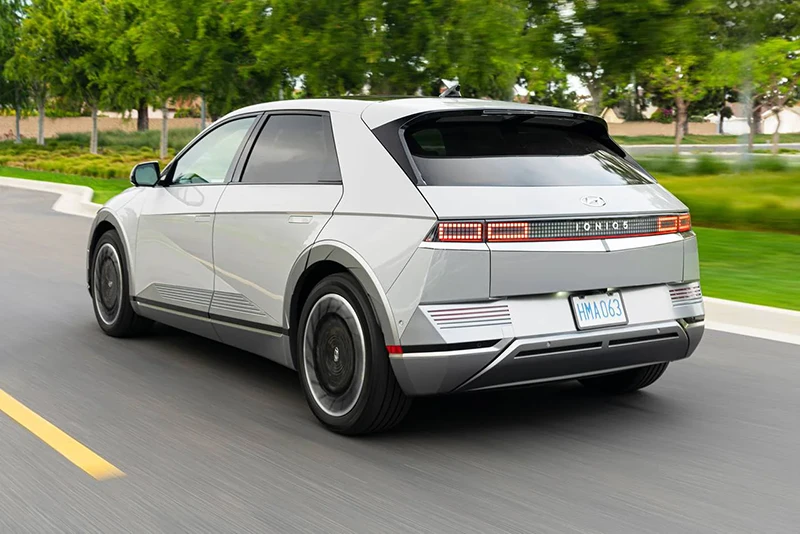
The one that started it. Revealed February 2021, it brought 800V fast charging to the mainstream for the first time. Retro-futuristic design inspired by the 1974 Hyundai Pony. World Car of the Year 2022.
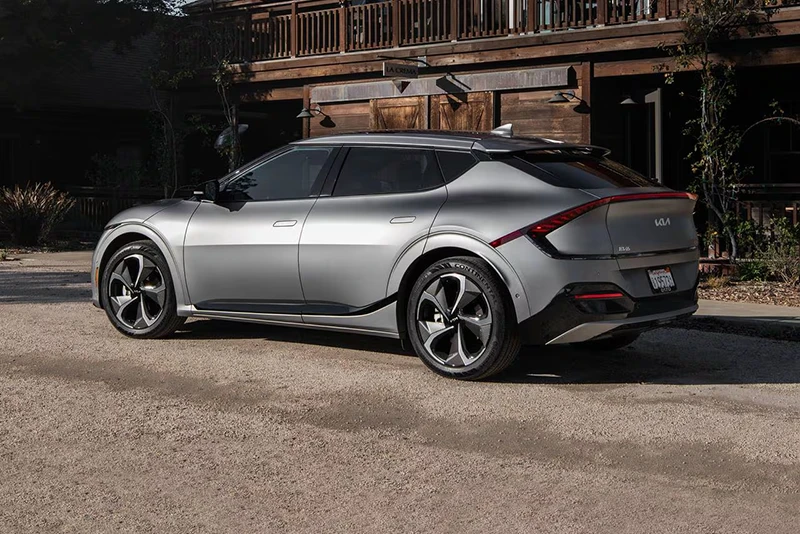
Kia's first dedicated EV. Sharper, more aggressive styling than its Hyundai sibling. Same 800V bones, different personality. European Car of the Year 2022.
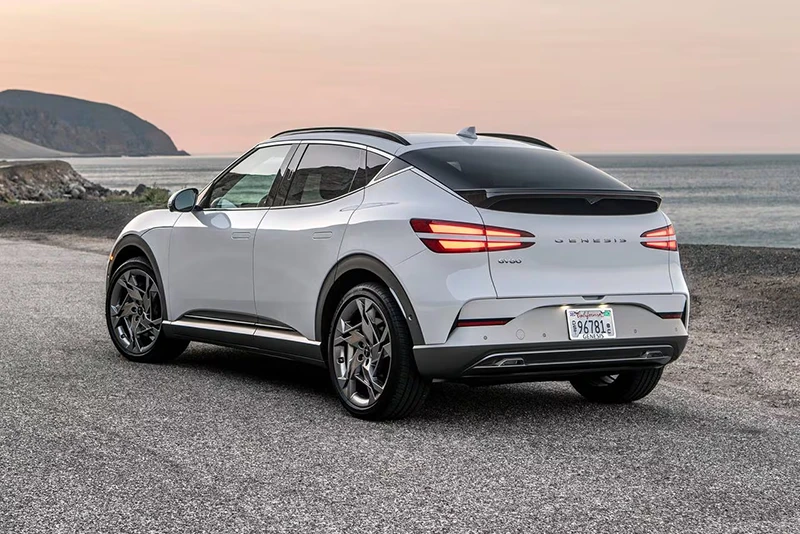
E-GMP's luxury debut. Unveiled August 2021, it brought the platform upmarket with a Crystal Sphere gear selector, available drift mode, and Face Connect biometric entry.
Vehicle photos courtesy of Edmunds.
VW had the right idea: a purpose-built EV platform (MEB) with massive scale. The hardware was fine. The software was a catastrophe. The ID.4 launched with a buggy, unfinished infotainment system that froze, crashed, and bricked itself. OTA updates that were supposed to fix things sometimes made them worse. Owners reported phantom braking, non-functional climate controls, and screens that went black while driving.
The platform had potential. VW's inability to write working software squandered it.
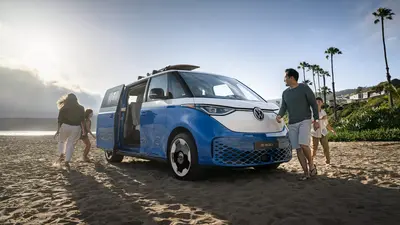
And then there's the ID.Buzz — a vehicle that feels like it was designed for a couple of wealthy families in California who needed a cool graduation present for their kid.
All that said, the Rivian partnership should help sort out their software issues, and I'm personally rooting for them — especially the Scout brand. I grew up with a Scout in the family in the '70s, and I'd love to see that nameplate come back right.
Honda — the company that built the original Insight hybrid — responded to the EV transition by building a crossover on GM's Ultium platform. The Prologue and its luxury sibling, the Electrified Acura ZDX, share the same Ultium bones as the Chevy Blazer EV — same GM infotainment, similar interior plastics. They feel like transition vehicles — but transition to what, exactly? More on that in a moment.
The Prologue was the best lease deal out there for a while — even in my drill-baby-drill neighborhood we've got one. But it suffers from GM-ish-ness. I'd still take it over the Blazer (unless you were offering me a Blazer RS), and I'm glad Honda had an offering that let their loyal customers try out the EV world. But what an underwhelming entry.
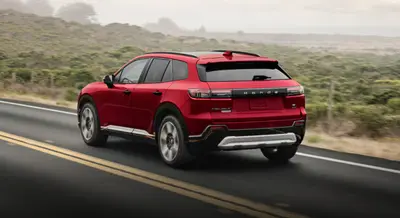
There doesn't seem to be a lot wrong with the Prologue. The exterior design actually looks decent. But I'd have loved to see Honda offer something that would make owners never want to go back to ICE. I'm not sure that happened here.
And now we know it won't — at least, not anytime soon. In early 2026, Honda announced it's abandoning its all-electric future and pivoting back to hybrids and — I need you to brace yourself — hydrogen. The numbers tell the story: Honda was spending over $12,000 in promotions per Prologue sold and roughly $21,000 per Acura ZDX, and still losing market share. They took a ¥113.4 billion ($780 million) one-time charge on EV operations, with full-year EV-related expenses expected to hit ¥650 billion ($4.47 billion). Their own CEO said BEVs are "not the goal" — just "a pathway," and apparently not even the preferred one anymore.
Honda. Hydrogen. In 2026. If you need me, I'll be over here banging my head on my desk. The company that proved hybrids could work twenty-five years ago just decided the future is a fuel you can't buy at 99.9% of stations in America. I genuinely hope I'm wrong about this one, but I don't think I am.
Ford did something genuinely bold with the Mustang Mach-E and the F-150 Lightning. Both are good vehicles. The Lightning, in particular, showed that a full-size electric truck could work. Then Ford looked at the sales numbers, got nervous, and started backpedaling. Production cuts, delayed models, strategy pivots back toward hybrids.
They've been signaling retreat from the EV space ever since a certain someone toured the factory. I hadn't heard much about their skunkworks EV project for a while, but in February 2026 CEO Jim Farley came out and said the ~$30K "inexpensive" EV platform was still being developed as a hedge, just in case this whole EV thing actually did start to take off in the United States. I guess that's encouraging. Until he said that, I half expected it would be Ford — not GM this time — coming to the taxpayers with hat in hand when Chinese EVs inevitably find their way to our shores.
Toyota spent years publicly fighting against EVs, lobbying against EV mandates, and insisting that hydrogen was the future. Their first serious EV attempt — the bZ4X — launched with a recall for wheels that could fall off. The company that perfected hybrid technology with the Prius chose to fight the next wave instead of lead it.
And range? Who needs range. What's better than wheels that fall off? Range anxiety and slow charging, apparently. OK, I'm being harsh. The bZ4X wasn't a bad vehicle, and neither was its Subaru Solterra cousin. For getting around town and charging at home, I'm sure they were perfectly fine. But at the same price point, the only reason people likely opted for the Toyota or Subaru was brand loyalty.
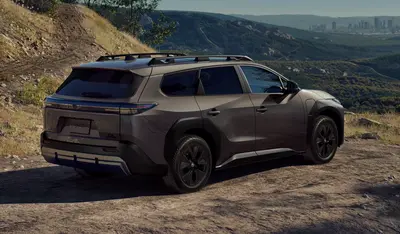
The good news is the new model is reportedly miles better, and I'm really looking forward to the Subaru / Toyota EV partnership with the Trailseeker / bZ Woodland and the Uncharted / C-HR. If they launch at the promised prices, I think they'll be huge hits.
Tesla proved EVs could be desirable. The Model 3 and Model Y are genuinely good cars. The Supercharger network is the best public charging infrastructure in the country. The engineering team deserves credit for dragging the entire industry forward.
But the company is inseparable from its CEO, who is using his billions to influence whether starving kids around the world get food and medicine that this country — through its elected representatives — legislated they should get. He has stoked hatred of the "other," meddled in elections foreign and domestic, and that's before you even get to a certain gesture he gave twice while speaking publicly.
Then there are the safety questions. NHTSA has opened a formal investigation into Tesla's failure to properly report crashes involving Autopilot and Full Self-Driving — sometimes waiting months when they're required to report within five days. They failed to report 15 Smart Summon accidents to federal regulators. When your crash reporting has gaps this big, it stops looking like an oversight.
I just can't with this company.
Everyone loves the Bolt. GM got so much right with it — as long as you never had to DC fast charge. I just never warmed to the design, and I feel bad about that. The Ultium platform has had its share of issues. The Hummer had significant battery and software problems, and the Lyriq wasn't immune either. But this is another manufacturer that finally seems to be settling into a bit of an EV groove.
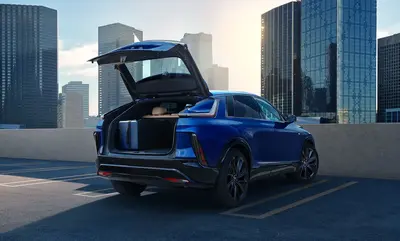
I'm glad Chevy sorted out its Blazer issues and is doing well with the Equinox — nearly 58,000 sold in 2025, doubling the year before. The Lyriq is a looker for sure, and GM deserves credit for pushing Cadillac to nearly 40% EV sales in Q3 2025 — the highest EV mix of any legacy luxury brand in the country. And the Silverado EV in fat-battery form is truly an amazing beast that I'd love to have for an off-grid home — haul stuff and power the house.
But who am I kidding? With that MSRP, I could just put up a few hundred kilowatt-hours of battery storage to do that. It's just cool that I could use my truck to do it.
Love them, love what they're building. Rivian is one of the few companies that feels like it genuinely cares about making great EVs, not just checking a regulatory box. The R1T and R1S are impressive vehicles, and the upcoming R2 and R3 lineup could make them a real mainstream player.
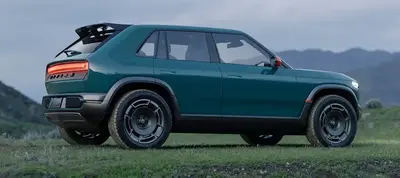
One note only: take a couple of notes from Scout and see if people want buttons. My guess is they do. But if I'm wrong, good on ya — the Tesla/Rivian customer demographic probably overlaps more than I suspect. I'd really have my eyes on an R3X, but I just don't think I could ever get used to a mostly-screen, minimal-button dashboard layout. I'd be tempted though. It comes about as close to that short-wheelbase, two-door (yeah, I know it's a four-door), almost-offroad, go-anywhere EV I'd love to have in the stable. Put a mild lift kit on it and some larger tires and I'm almost there. But about those buttons.
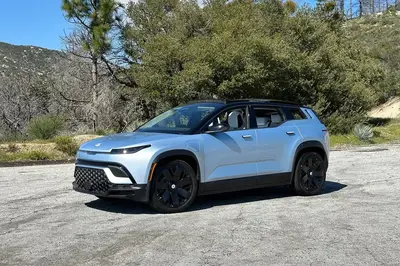
Photo from Edmunds.com
Absolutely beautiful, and innovative in some ways. But financial issues meant a botched deployment, buggy software, and eventual collapse. That meant some stellar deals were to be had, but I don't know who would put up with the kinds of issues that Edmunds.com details in their post-mortem after they sold their $70K car for $10K.
The Ocean had real potential from a design and ingenuity standpoint. The car itself turned heads, and the solar roof was a genuinely interesting idea. None of that matters when the company can't stay solvent long enough to support the cars it sold.
I was really pulling for them too.
I've been watching Lucid since they were a new entry at the NY Auto Show. They got it right — 900-volt architecture, industry-leading range, genuinely beautiful cars. But not for us poor folks.
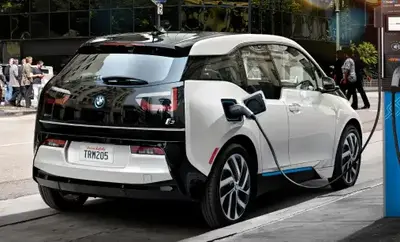
Oh. The i3. Yeah, OK. You got me. People love them, and they were purpose-built EVs. BMW built a loyal following and won awards. But I wouldn't have bought one for the same reason I didn't buy the Smart EV — they're just a little too radical for me, and the range for the price wouldn't fit a whole lot of use cases, at least not here in the States. I do love that BMW is now making EVs that look a lot like their regular cars. All I wanted from Jeep was for them to make an electric Wrangler.
Stellantis, fresh off ruining the Jeep brand by cutting quality control and raising prices 50% over five years, decided to launch its first EV — the Wagoneer S — with buggy software, questionable drivability (limp mode on day two, vehicles that won't start or won't shut off), and a $74,000 price tag no one wants in a Jeep. Its STLA platform promised awesome range, and the Recon — the EV stand-in for the Wrangler — is set to launch at a stratospheric MSRP, likely feature that good old Stellantis reliability, and deliver range well below what was promised when the platform was announced. Yeah, I know it's tough to move a brick through the wind on electricity — but don't promise what you can't deliver.
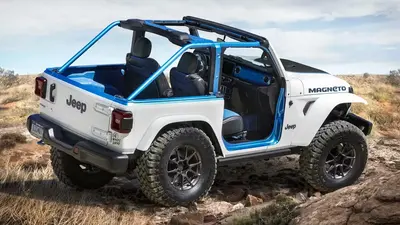
The author wants this, but Jeep doesn't.
Hey Jeep. Just give us the Magneto, will you?
I hope that once battery densities get to a certain point, someone will offer a two-door, short-wheelbase, open-air, two-box, go-anywhere vehicle with high ground clearance and a bouncy ride. I know that kind of flies in the face of the skateboard platform idea, but there has to be some way to make it happen, right? There are a lot of talented engineers out there. Who will be the first to do it?
Oh, and let's not forget — Jeep sold more plug-in hybrids with the 4xe Wrangler than any other manufacturer in the country. It was America's best-selling PHEV for years. And what did Stellantis do for those customers? Told them to park outside, don't charge your battery, don't call us — we don't make those Frankenstein monsters anymore. Three recalls, 320,000 vehicles, and they still don't have a fix as of February 2026.
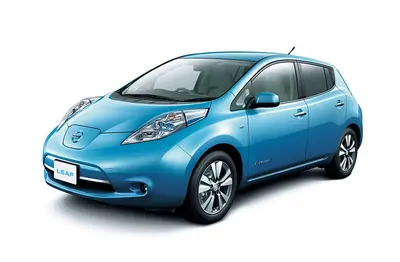
How can we forget the Leaf? It's cool. No, it's not. And that's the issue. Nissan launched the original mainstream EV with no battery thermal management — just air cooling — and owners in warm climates watched their range evaporate year after year. They eventually fixed it, but still. Then there was "Rapidgate" — DC fast charge once, and the car would throttle speeds down to 24 kW for subsequent sessions, making road trips an exercise in patience. And they bet on CHAdeMO for fast charging, a standard that's now effectively dead in North America. People love their Leafs — and I respect that it got a lot of people into EVs for the first time.
The Ariya is a beauty, and it's too bad Nissan pulled it from the US market after 2025. Between the 15% import tariff and a pivot back to a new Leaf, they just couldn't make it work here. Maybe it comes back. Maybe it doesn't.
Wonderful hardware hampered by "Google Car" frustration. The Polestar 2 is a genuinely great-driving EV, but the Google-based infotainment has been a sore spot — crashes, lockups, flaky radio reception, and a class action lawsuit to show for it. When the software works, it's fine. It just doesn't always work. And now the Polestar 2 has been pulled from the US market due to tariffs.
I seriously looked at these. But between the software headaches and the brand's uncertain future in the US, I have to wonder about long-term viability. It's hard to commit to a vehicle when you're not sure the company will be around to support it — just ask Fisker owners.
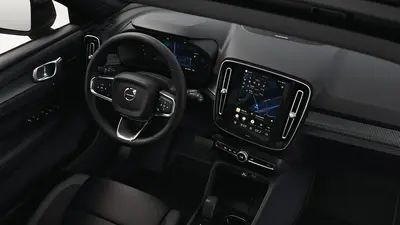
Solid entry. If you're a fan of EVs that look like their ICE siblings inside and out, Volvo is making reliable, well-built electric cars. But they went full minimalist — nearly every function buried in a touchscreen, including basics like mirror adjustment, heated seats, climate control, and even the glovebox. It's the same Google Android Automotive system as Polestar, with the same frustrations. For a brand built on safety, making drivers navigate deep menus on a screen to do simple things feels like a strange choice.
Somewhere, a Saab engineer is shaking his head. That man never met a problem that a well-placed button couldn't solve.
OK, some of you are steaming mad at me now. Yeah, I've thrown a lot of shit at other brands. The truth is, I like something about each of them. I just don't like everything about each of them.
The Ioniq 5 and EV6 just got my attention in a big way, because they got the closest to offering everything I was looking for in an EV, and they got there FIRST — styling that was forward but not too garish or obviously EV, a size that was decent for a family that needed to haul things sometimes, solid range with the added benefit of some of the fastest charging on the market if you wanted to leave home base, a price that while high wasn't as outrageous as some of its peers, reasonable lease terms for those who decided to take that route and back-door a purchase using tax incentives, and now? Super amazing second-hand purchase deals on a stellar automobile.
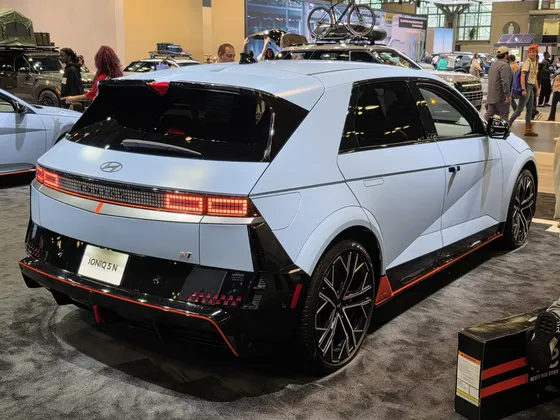
They didn't just build one good EV. They built a platform that works across three brands — Hyundai for the mainstream, Kia for the design-forward, Genesis for luxury — and they made halo cars that got people excited. The Ioniq 5 N and the EV6 GT are not compliance cars. They are cars that make enthusiasts reconsider everything they thought they knew about electric vehicles.
Yes, the ICCU issue is going to scare a lot of folks away, and yeah, it's the single most significant thing pulling down this platform at the moment, and it needs to be fixed. But the overall packages offered on top of this platform are outstanding, and the group's commitment to electrification has been consistent.
And unlike most of the competition, they're actually making money doing it. In 2024, Hyundai Motor America's CEO confirmed that the Ioniq 5 and Ioniq 6 are profitable on a per-unit basis — a claim most mainstream EV makers still can't make. For context, Ford's EV division lost an estimated $48,000 per vehicle in 2024.

The group is also investing heavily in US production. Kia's plant in West Point, Georgia — a 2,200-acre facility that's been building the Telluride, Sorento, and Sportage since 2009 — added the EV9 and EV6 to its lineup following a $217 million expansion. Georgia-built vehicles avoid the 25% import tariff (don't even get me started) on Korean-built cars, which is a significant cost advantage in today's trade environment. The Telluride in particular has been a hit for the plant, and Kia ranked #1 in J.D. Power's Initial Quality Study in 2020 during peak Georgia production. That said, the plant hasn't been without growing pains — trim pieces detaching, a seat motor recall, and the kinds of fit-and-finish issues that tend to accompany high-volume ramp-ups. Whether EV production there reaches the same maturity as the ICE lines will be worth watching, but the foundation and workforce are established.
The EV market is maturing, but technically, we're still in early days. At long last, every brand I mentioned above is starting to fine-tune its offerings and bring to market products that feel more aligned with consumer desires. That's a good thing, and I'm always eager to see how they address growing pains and refine their platforms and vehicles. The new crossovers coming out from the Hyundai group are exciting and fun, and the refreshed current offerings are getting stellar marks from reviewers and consumers alike.
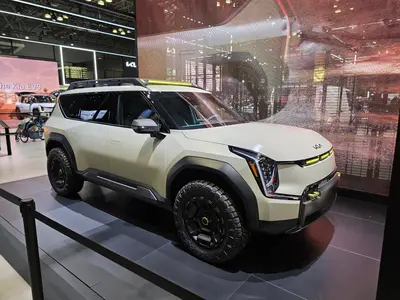
At the 2025 NY Auto Show (and introduced at SEMA 2024 in Las Vegas), Kia showed a ruggedized version of their EV9 — the ADVNTR Concept — that I totally fell in love with. It's probably out of my price range, but I hope Kia builds it. I'd love to see a sport utility competition between Rivian, Scout, and Kia — and maybe Toyota, who might possibly be launching a Land Cruiser EV? I'd invite Ford, but I don't think they're interested in bringing their EV Bronco out of APAC. Is there a market for all these similar EVs? Perhaps not at the moment, but I think the revolution has only been postponed, not cancelled.
But at the end of the day, I really want to spend my money with a company that has bought fully into the EV revolution and that's trying to excite people with their EVs, not a company that's waffling on their commitment to change and backing down. I'm not the CEO of these companies, so it's easy for me to sit here and point fingers, I know. It's just disheartening to see how many auto manufacturers caved in the face of changing political winds, rather than doubling down and making their case for moving forward. The rest of the world isn't going to wait for us. Every step backward is ceding the ground to someone else.
And that's why I love what Hyundai / Kia / Genesis is doing. They're keeping their foot on the throttle, even in the North American market. You just have to respect that.
But I'd still like that battery preconditioning button in my 2023 EV6. I don't even mind if Kia buries it in a menu somewhere.
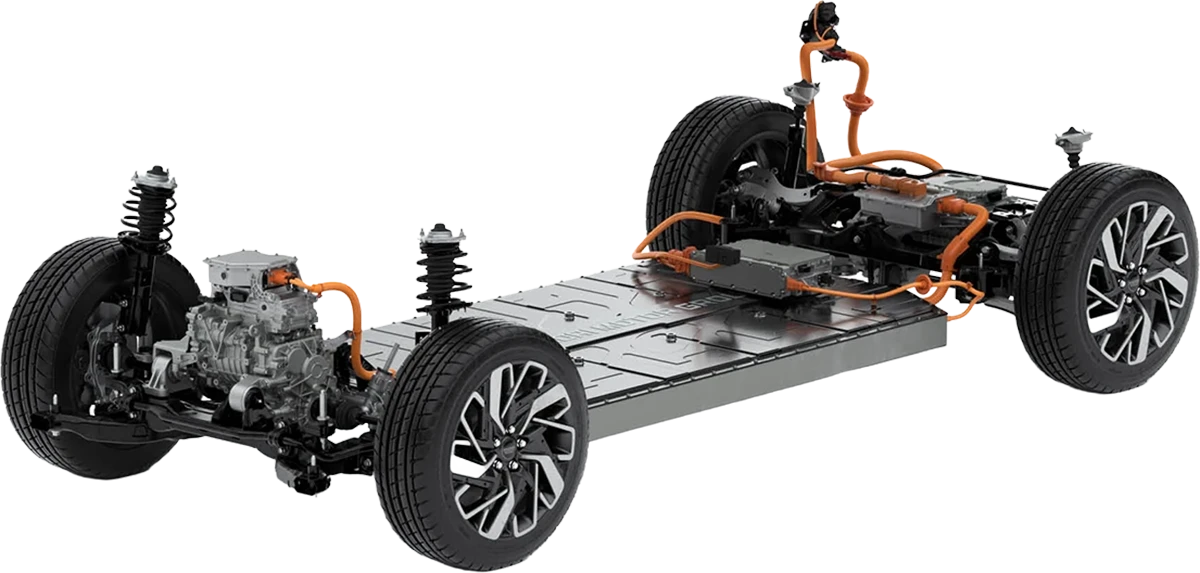
E-GMP — Electric-Global Modular Platform — is a purpose-built EV architecture. Not a modified gas car platform. Not a shared hybrid/EV compromise. A ground-up design for electric vehicles.
Most EVs operate at 400 volts. E-GMP runs at 800V — though a 400V variant underpins the Kia EV3 and EV4. Higher voltage means less current for the same power, which means less heat, thinner cables, and — critically — the ability to sustain fast charging speeds without throttling. While 400V cars slow down to protect their components during fast charging, 800V E-GMP vehicles maintain high charging rates much deeper into the session.
When E-GMP launched, it was the first mass-market 800V architecture. Porsche had the Taycan at 800V, but that started at $90,000. The Ioniq 5 brought 800V charging to a $45,000 crossover.
Every E-GMP vehicle can export power — up to 3.6 kW in 230V markets, or 1.9 kW in North America — from either the charge port (with a V2L adapter) or an interior outlet. That is enough to run a refrigerator, power tools, a portable air conditioner, or charge another EV. During power outages, an E-GMP vehicle is a 77 kWh battery on wheels. During camping or tailgating, it is a silent generator.
With the battery pack forming the floor of the vehicle and no transmission tunnel, driveshaft, or exhaust system to work around, E-GMP vehicles have a flat, open interior. The wheelbase-to-length ratio is unusually high, meaning more interior space relative to the car's footprint. The Ioniq 5 is the size of a compact SUV on the outside and has the legroom of a midsize sedan on the inside.
Hyundai Motor Group runs three brands off E-GMP, each with a distinct identity:

The mainstream. Ioniq 5 and 6 brought 800V to the masses. The Ioniq 5 N proved EVs can be genuinely fun.

The design-forward one. The EV6 won European Car of the Year 2022. The EV9 redefined what a three-row EV could look like.

The luxury play. The GV60 competes with BMW, Mercedes, and Audi at a lower price point.
E-GMP is not perfect. The ICCU charging controller has a documented design defect that has affected a meaningful percentage of vehicles. It is the platform's biggest flaw, and this site documents it in detail. But the platform underneath — the 800V architecture, the motors, the battery packaging, the charging speed — is genuinely excellent. If Hyundai and Kia fix the ICCU properly (and signs suggest they are trying), E-GMP will be the benchmark everyone else is measured against.
Last updated:
↑