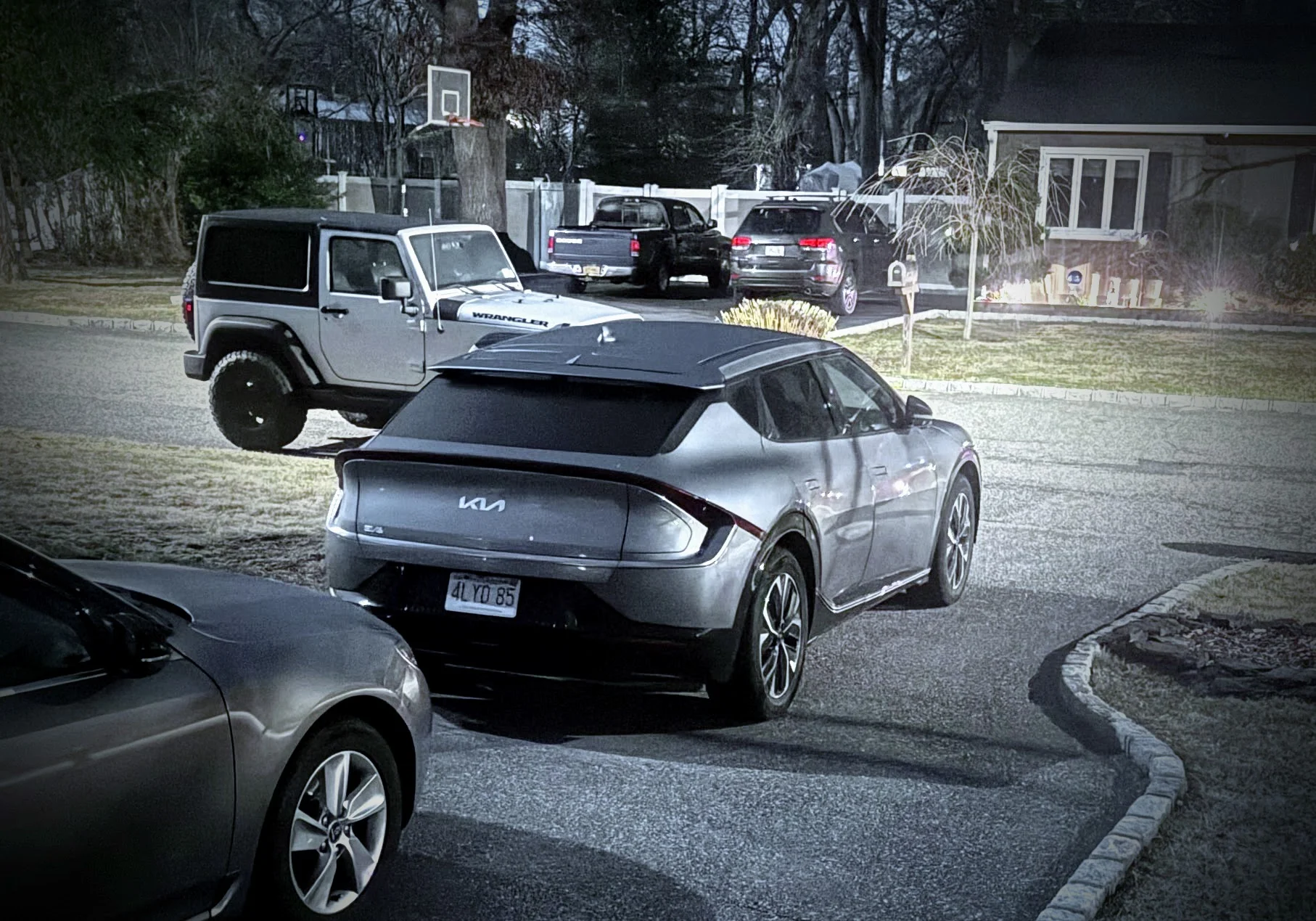
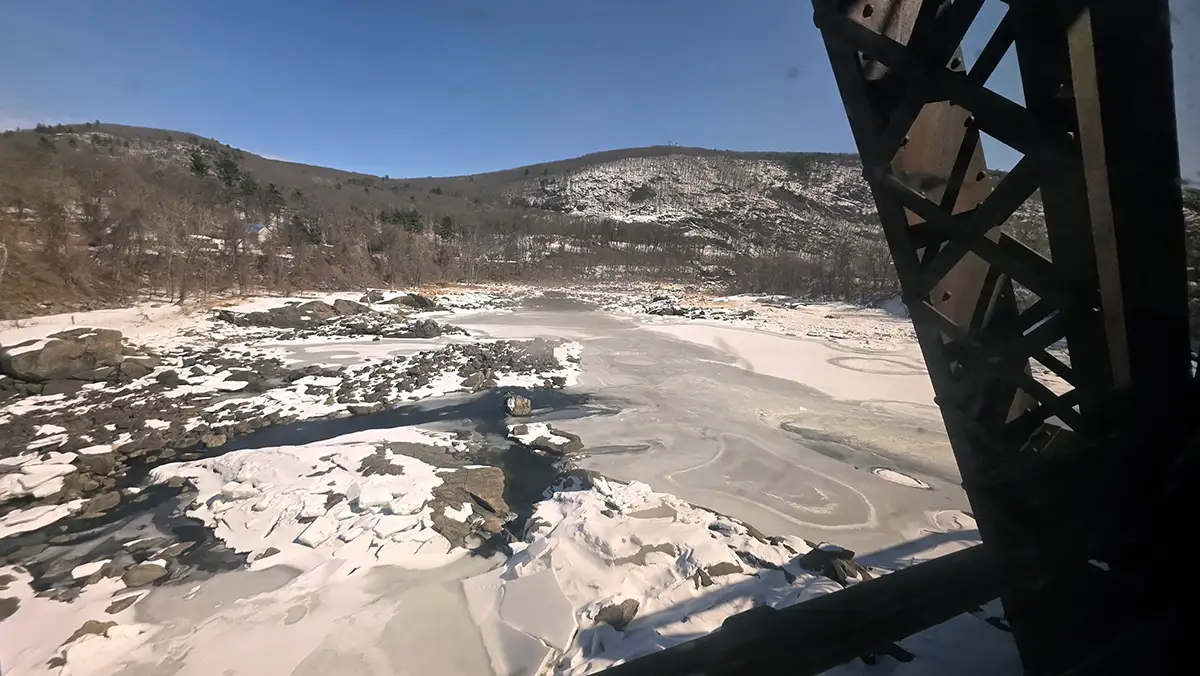
My Journey
Every car tells a story about where you were in life when you drove it
Many of us first fell in love with the cars our families drove. It's natural, since we have
our first formative experiences in them. This is the lineage of vehicles that eventually led
to an electric crossover from South Korea — starting with a yellow Volkswagen Beetle
that my parents spray-painted by hand.
Tilly
A yellow VW Beetle, spray-painted by hand
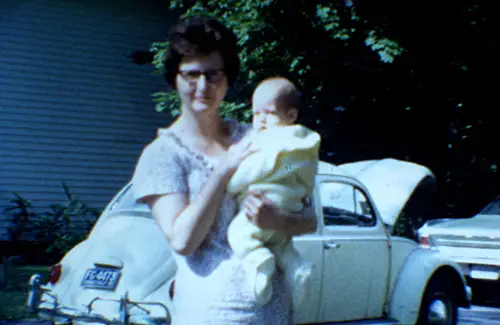
With my grandmother and Tilly, the once green, later yellow Beetle.
The first car I ever rode in was definitely Tilly, a VW Beetle that was originally green until my parents decided to paint it yellow. They bought some cans of spray paint to give Tilly
a makeover, and drastically underestimated how many cans it takes to paint even a car as small as a Beetle. They ended up going back to the store quite a few times for more cans.
I should ask my dad why they named it Tilly.
1968 VW Squareback
Handed down from grandparents, mourned when it left
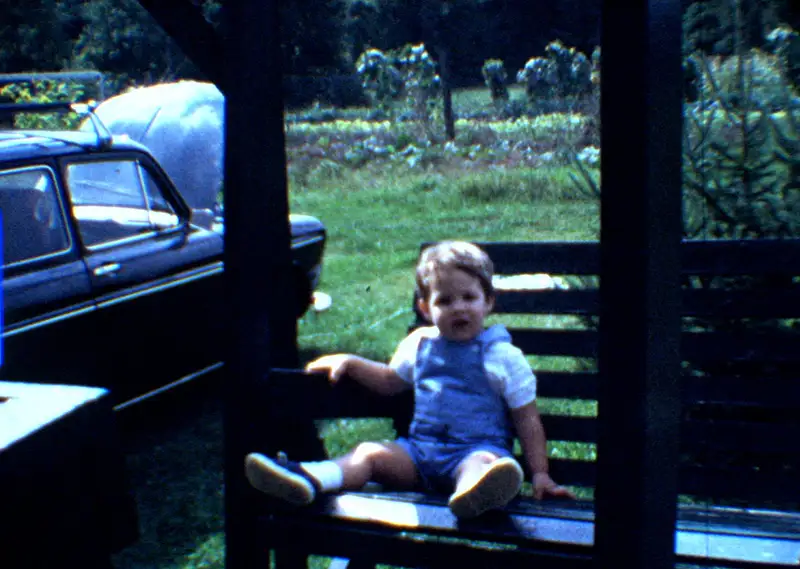
At my other grandma's house in Cornish, NH, around 1972. The Squareback is behind me.
The first car I actually remember being in was our 1968 VW Squareback. My mom's parents
sold it to us because we apparently had a VW mechanic who knew how to fix the fuel injection
system, and my grandparents did not.
I remember being pretty upset when we sold the car.
The Scout
Dad's work truck — an International Harvester that didn't always start
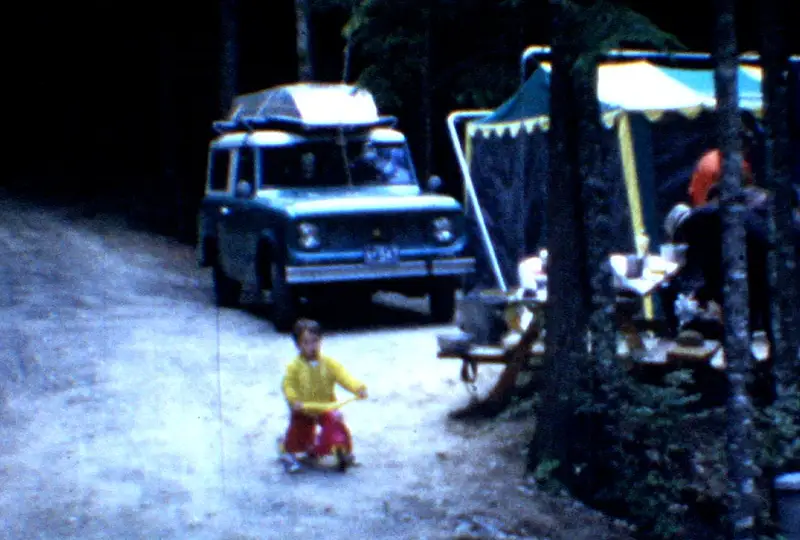
At a campsite with the Scout loaded up behind me.
At the same time we had the Squareback, my dad had a Scout as a work truck. A couple of times
Dad and I were out somewhere remote and it wouldn't start.
I don't remember how he got it started when we were at the sand pits getting a trailer full
of sand for mortar, but one time when he took me out hunting, he pushed the thing down this
giant hill in the middle of the woods, and ran alongside it trying to jump in and pull the
clutch before it — and I, in the passenger seat — got away from him.
After the first Scout, Dad got another one, and then after that a Ford Bronco that rusted out
faster than any vehicle we had before or since. You could see the road through the floorboards.
1973 VW Super Beetle
Red, semi-automatic, accident-damaged, and full of character
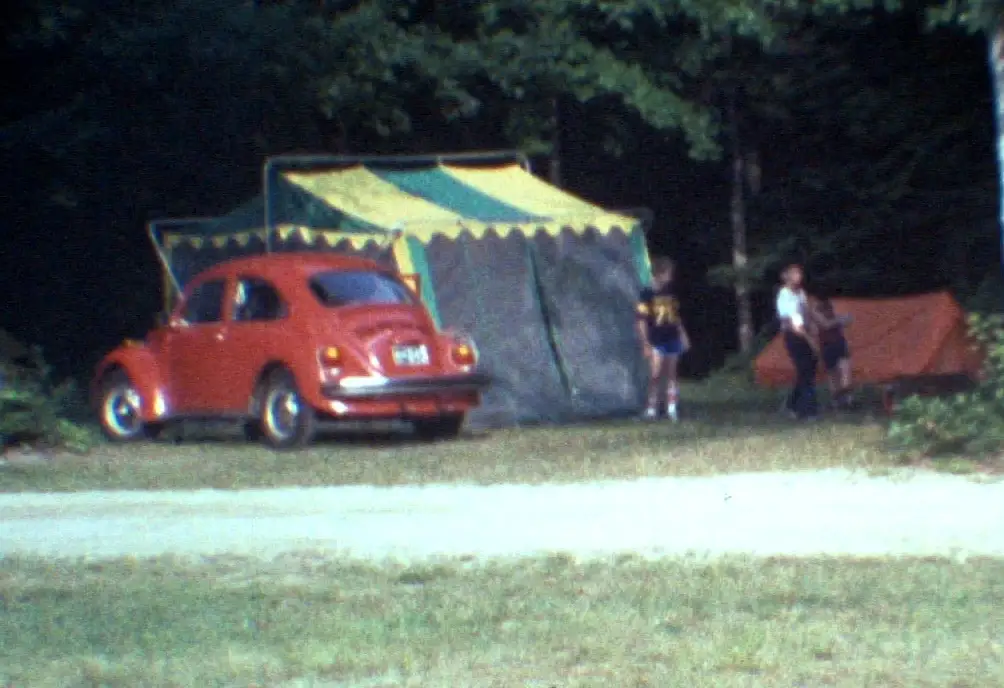
The red Super Beetle at a campsite.
The red ’73 Super Beetle had been in an accident and kept needing its driver side strut
replaced for some reason. But the semi-automatic transmission was cool. It was basically an
automatic with three gears — Low, 1st, and 2nd. When you touched the gear shift, the
“clutch” engaged, and you'd shift. Let go of the shifter, and the clutch
disengaged.
At some point, the car stopped being able to climb hills. When we took it in to the VW shop in
Woodstock, New Hampshire, I remember the mechanic saying the torque converter was shot. I didn't
know what that meant other than the look on my parents' faces said it was an expensive repair.
The mechanic also bypassed the ignition when it wouldn't start and put a button on the dash.
I'm not sure if the button started the car or just allowed it to start — it might have been
a relay, because I know Beetles had an issue with starter current going directly through the
steering column instead of just being triggered by the ignition switch.
Beyond that, when it got cold, oil would get pushed out of the dipstick tube. Dad would put
insulation in the engine compartment and a work light bulb in there to try to keep it warmer
overnight. It worked pretty well as I recall, but my folks had had enough with the little Bug.
They wanted something solid and reliable.
1976 Jeep CJ-5
Ordered from the factory, every option hand-picked — and the first vehicle I ever drove
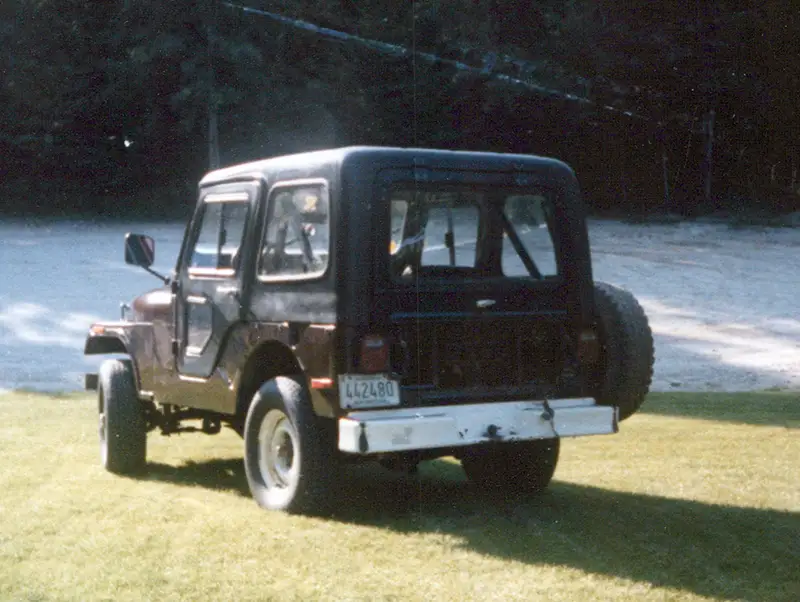
The 1976 CJ-5 — the hard top was added much later.
When my dad ordered the 1976 CJ-5, everything was an option — back seat, roll bars,
voltmeter, radio, all of it. My dad seemed to like that he had ordered the voltmeter and some
other gauge that sat above the radio, as it gave him more insight into how the vehicle was
functioning.
It had the good old reliable inline-6 258 4.2L by AMC and a three-speed manual. First gear
was super low, a real stump puller. Second was fairly high, and third was the freeway gear.
I remember this, because it was the first vehicle I drove when I turned fifteen. You really
had to rev that first gear up, or when you put it in second, you would really be lugging the
engine.
The Camping Trip
The CJ was the first vehicle I was allowed to drive for an overnight, on a camping trip to
North Conway, New Hampshire with my high school friends. Our chaperones were two kids one of
my crew knew who I'm pretty sure had already graduated from high school. They went into town
and got beer, brought it back to the campsite, and proceeded to get drunk and chop up an old
picnic table and throw it on the fire.
I went to get firewood at the camp store, thinking this would prevent the rest of us from
getting in trouble. As I left the store, I saw the flames reaching above the tall pines
surrounding our site, and knew we were going to get kicked out. Not only did we get kicked
out, the cops followed us out of town to make sure we weren't coming back.
Almost Flipped It. Twice.
I almost flipped the CJ twice. Once when I tapped the brakes going down an icy hill —
the Jeep spun around a few times, but stayed upright. Another time I hit a dip in the road
where a culvert had collapsed.
It wasn't a stable vehicle, but it was fun. It didn't have a steering stabilizer by default,
so the wheel would fight you on frost-heaved back roads.
Saab 900
The one that won on engineering
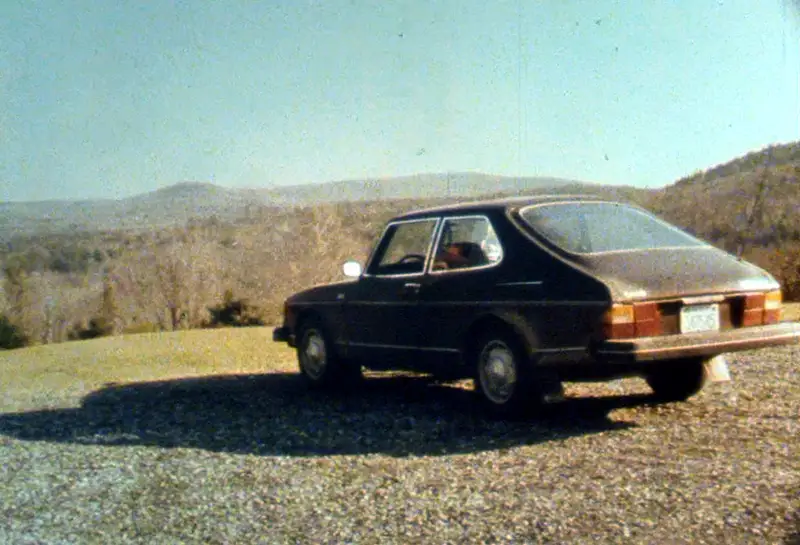
The 1980 Saab 900 GLi, at Dexter's Inn, Sunapee, NH, 1988.
My parents wanted something solid and reliable. We had a Saab dealer in nearby Claremont,
New Hampshire whose reputation was stellar. Dean Hill Motors sold and serviced the odd-looking
Swedish cars, and everyone raved about them. The 96s were all over town when I was a kid, and
the 99s started taking over. By the time we started looking, the 900s had just come out, and
they were known to be expensive automobiles.
We weren't wealthy by a long shot. All the money my parents made went into our house —
an old 1800s stagecoach road farmhouse that my dad had been renovating from the foundation up
on nights and weekends. For some reason, my parents decided to test drive one at a different
dealership, in Manchester. My mom always said that as soon as she drove that car, she fell in
love with it. I imagine it was quite an upgrade from the ’73 autostick Super Beetle she
had just gotten out of.
The One That Got Away
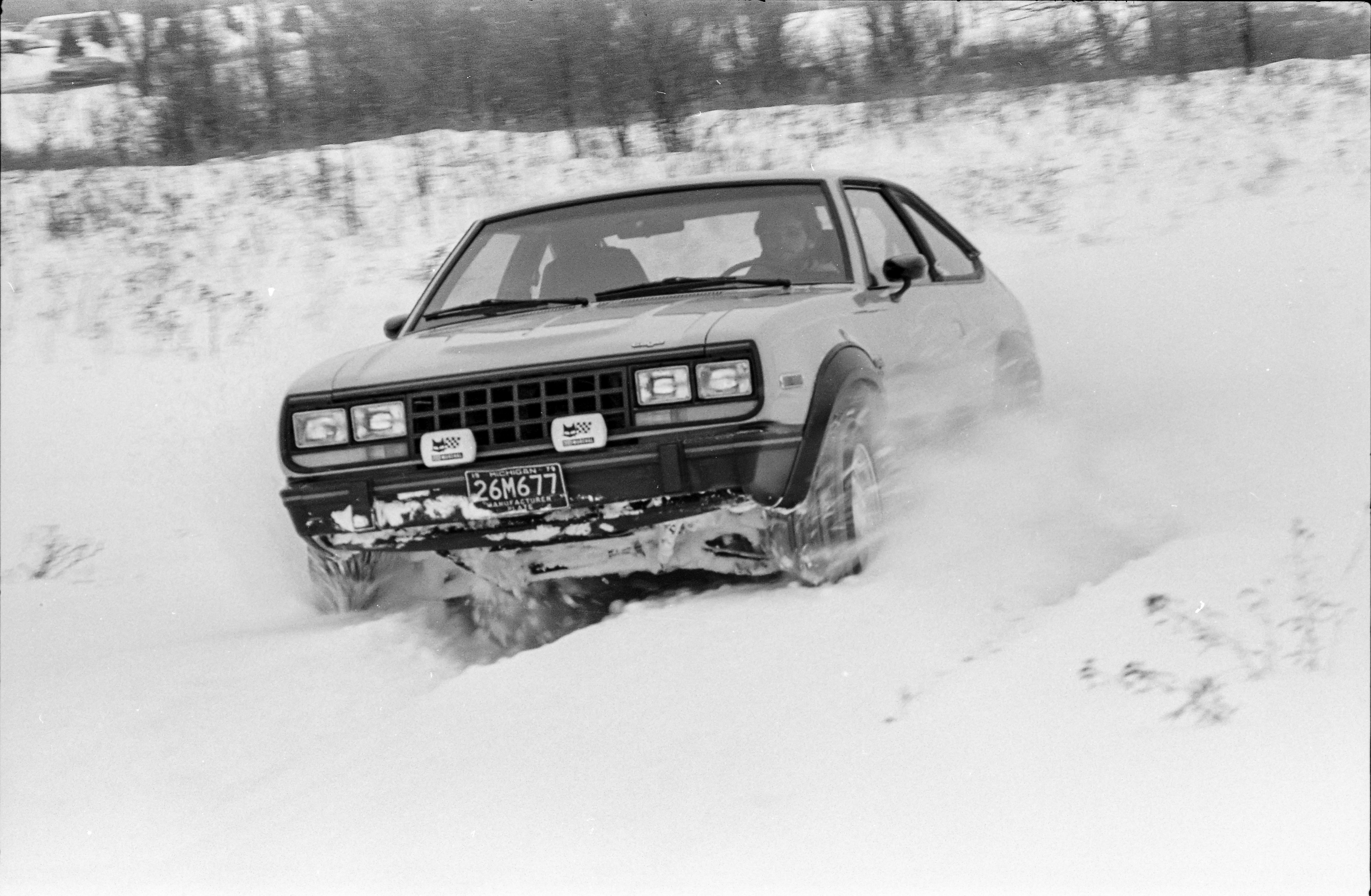
The 1981 AMC Eagle. Photo: Jean Lindamood / Car and Driver.
But it wasn't yet a done deal. As we had a CJ that was serviced at the local Jeep dealer, we
became aware that there was this new, innovative vehicle from AMC — a special version of
the AMC Concord that was lifted and put on a Jeep 4x4 chassis. It seemed just the thing to get
us down our mile-long dirt road driveway when mud season hit. Both Mom and Dad could have
capable, rugged vehicles that could handle the spring thaw. I loved this new beast. A lifted
station wagon with four-wheel-drive? And the thing was so cool — all you had to do was
flip a lever by the steering wheel, and suddenly you were in four-wheel-drive. You didn't
have to fight with the transfer case shifter, didn't have to go out in the mud and lock the
hubs by hand — it all happened auto-magically. How could they not get one?
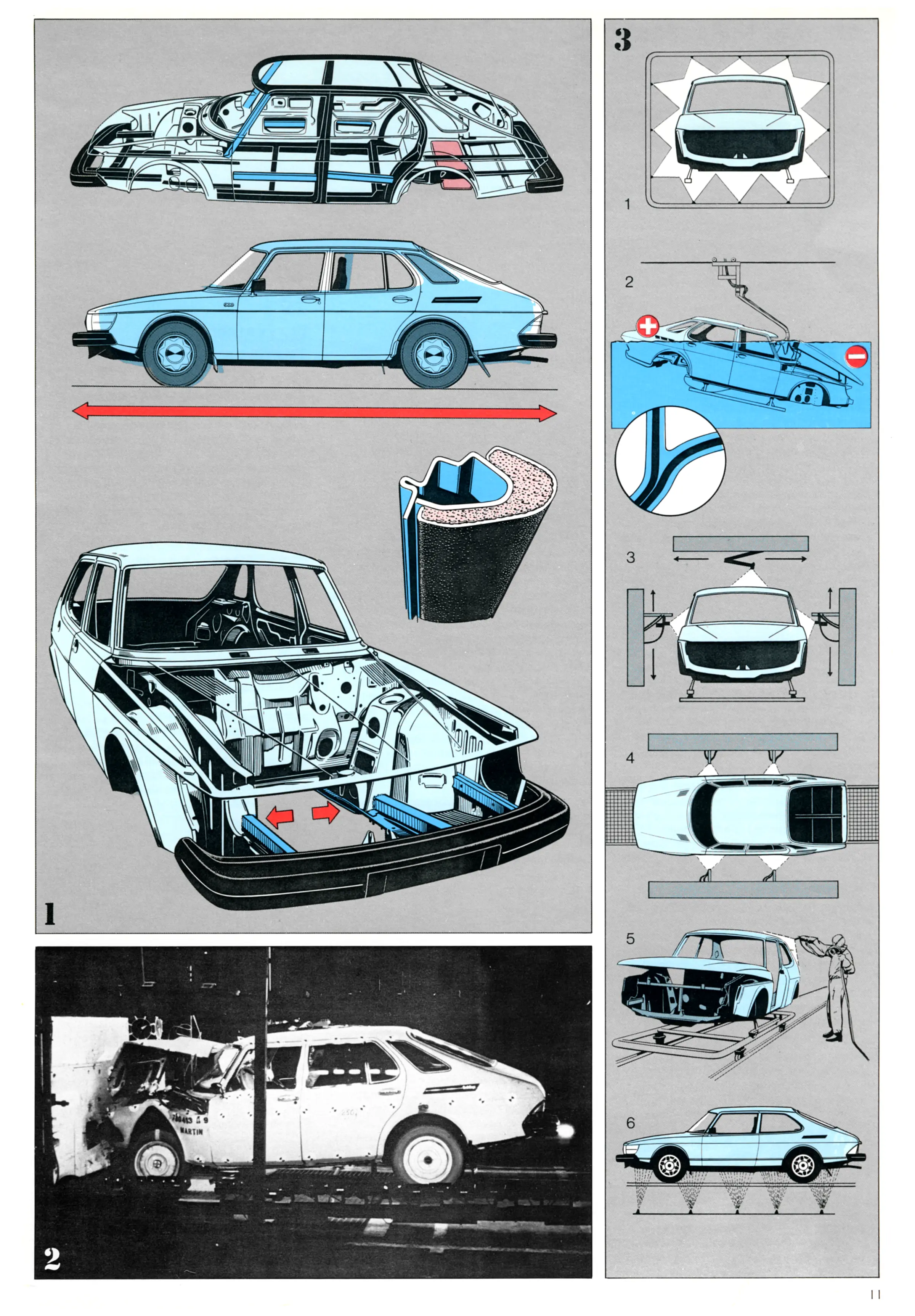
Well, my dad graduated with an engineering degree, so the moment the Saab dealer handed him a
30- or 40-page booklet detailing all the thought and innovation that had gone into the all-new
Saab 900, the die was cast. We were going with team Sweden, and the fantastic service department
that had the best reputation in town. If you'd like to see the document that sold my dad on
Saab engineering, you can download it by clicking on the button below the image on the right.
I was pretty upset with that one, but it was the right decision. Saab would go on to make great
cars for another couple of decades, while AMC/Jeep/Eagle would end up being bought by Chrysler,
and the Eagle brand farmed out for cars that weren't go-anywhere station wagons or hot lifted
hatches.
Paying Attention
The cars that caught my eye when I started actively looking
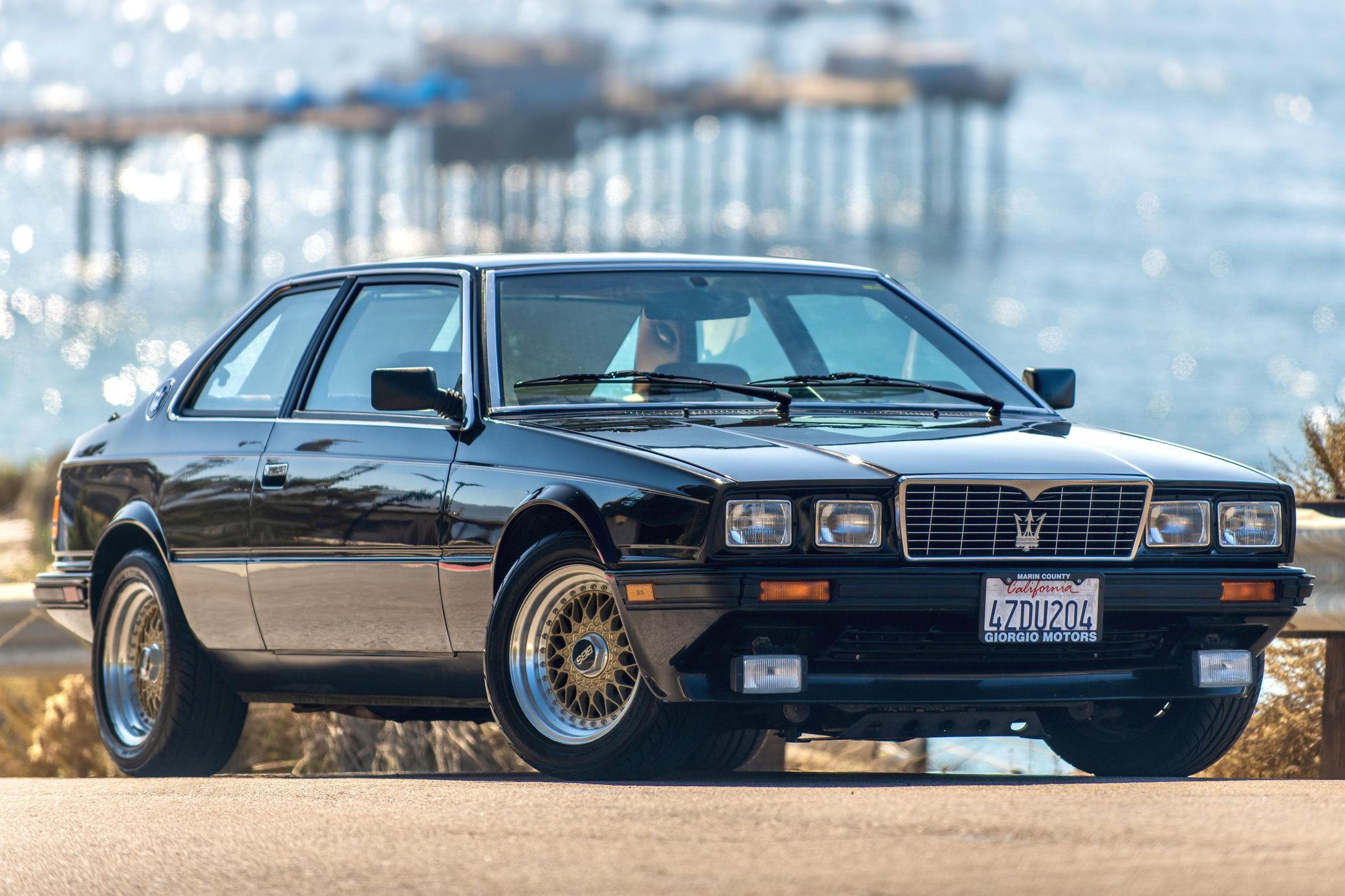
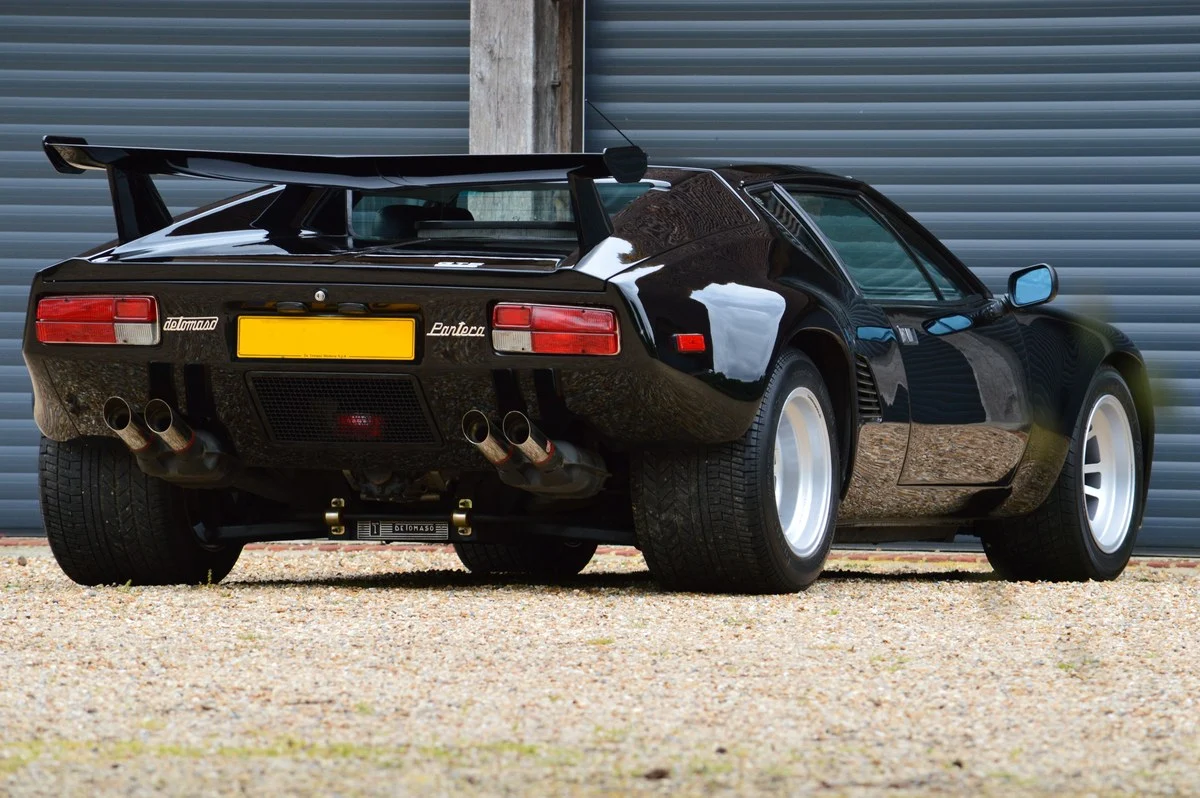
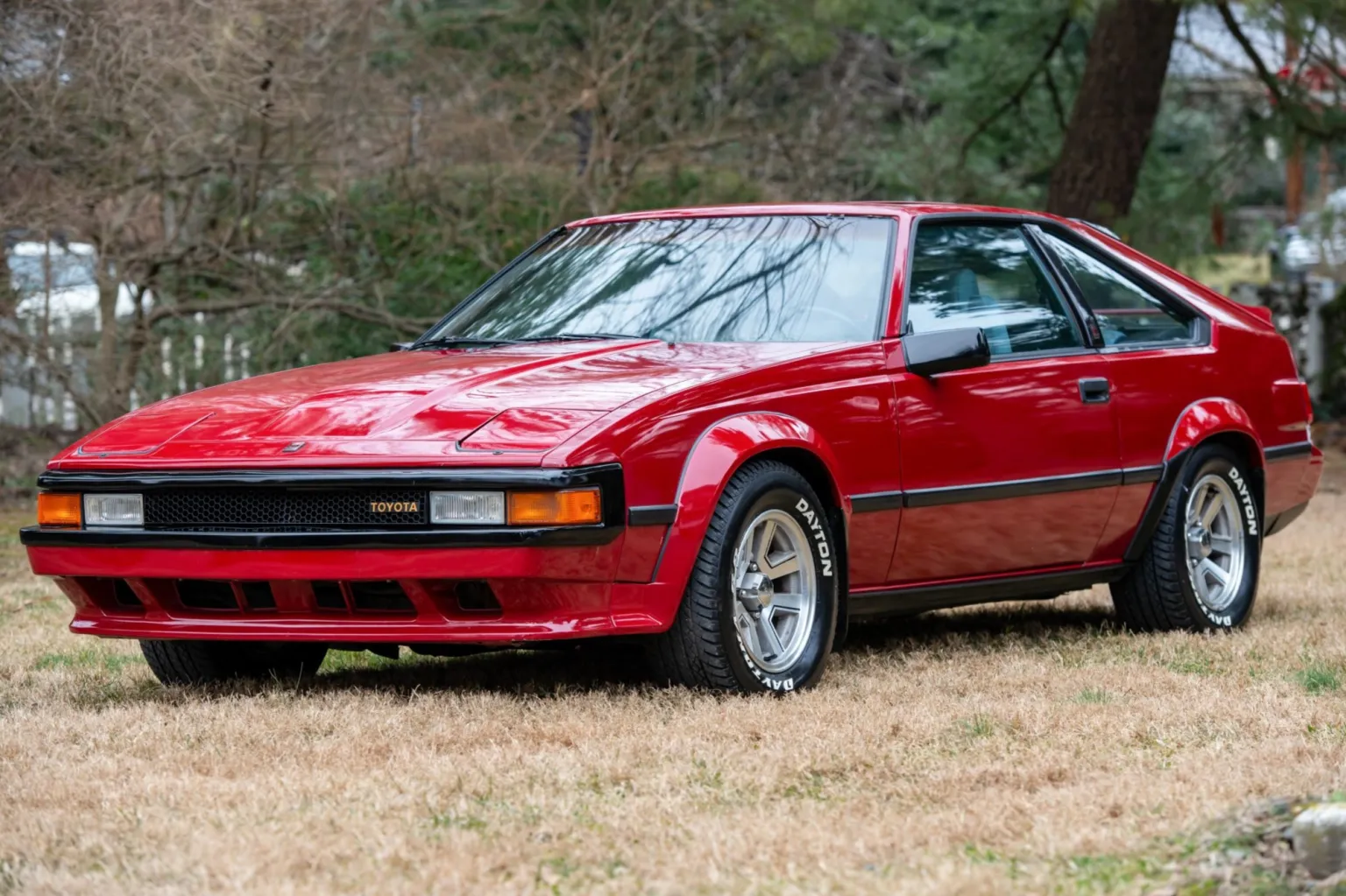
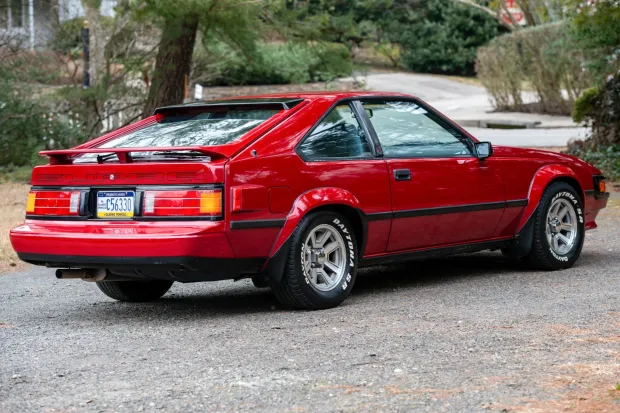
Clockwise from top left: Maserati Biturbo, De Tomaso Pantera GT5, Toyota Celica Supra (rear), Toyota Celica Supra (front).
It was around this time that I started digging into that Saab engineering guide, noticing all the
cool things that went into making the 900 the machine that it was. The dealership gave us some
pamphlets about Saab's rally heritage, and the glowing turbochargers on the 99s were one of the
wickedest things I'd seen.
I started subscribing to the "Big Three" — Car & Driver, Motor Trend,
and Road & Track — and dreaming about the cars I hoped to own, or at least
drive someday. Perhaps it was the odd styling of the Saab, but I grew to love angular designs.
The Maserati Biturbo and De Tomaso Pantera GT5 stood out, and there were enough Supras
cruising around our corner of New Hampshire that I started watching driveways and parking lots
for anything interesting.
My Wheels
Doors off, back roads, and a brand new Wrangler
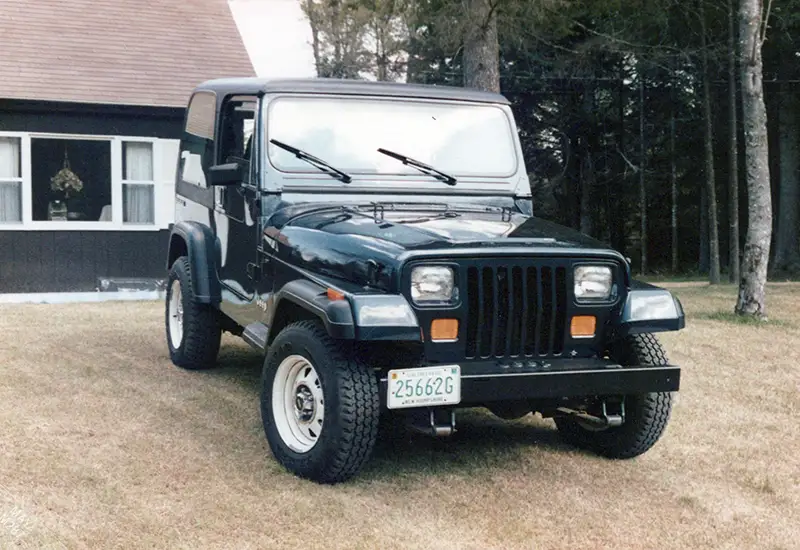
Dad's YJ in 1987 (he still has it in 2026).
When I turned fifteen, I started driving, and the CJ-5 became "my" vehicle. Mom had the Saab,
and Dad rotated through a few company cars — a Toyota Corona, a pretty rare 5-door Saab
900 hatchback, and a Chevy Lumina Eurosport.
I loved taking the doors off the Jeep and rolling the back window up at every opportunity and
just driving around the back roads of southwestern New Hampshire.
By the time 1987 rolled around, the CJ was facing a second round of rust repair and it was
starting to have issues running, so my dad decided it was time to sell it. He looked at a
Toyota pickup, but in the end decided to get another Jeep. AMC had just come out with the
redesigned Wrangler (YJ). He didn't care if the headlights were square — he liked his
2-door, short-wheelbase utility vehicles, and decided to stay with the brand.
For some reason, he let me drive the new one to high school every day. Can't get much better
than a dad who trusts you with his new ride, eh?
New York
A graduation Saab, two terrible Cavaliers, and Dad's Eurosport to the rescue
After high school, I went to school in Boston (no car) but continued to drive the YJ when I
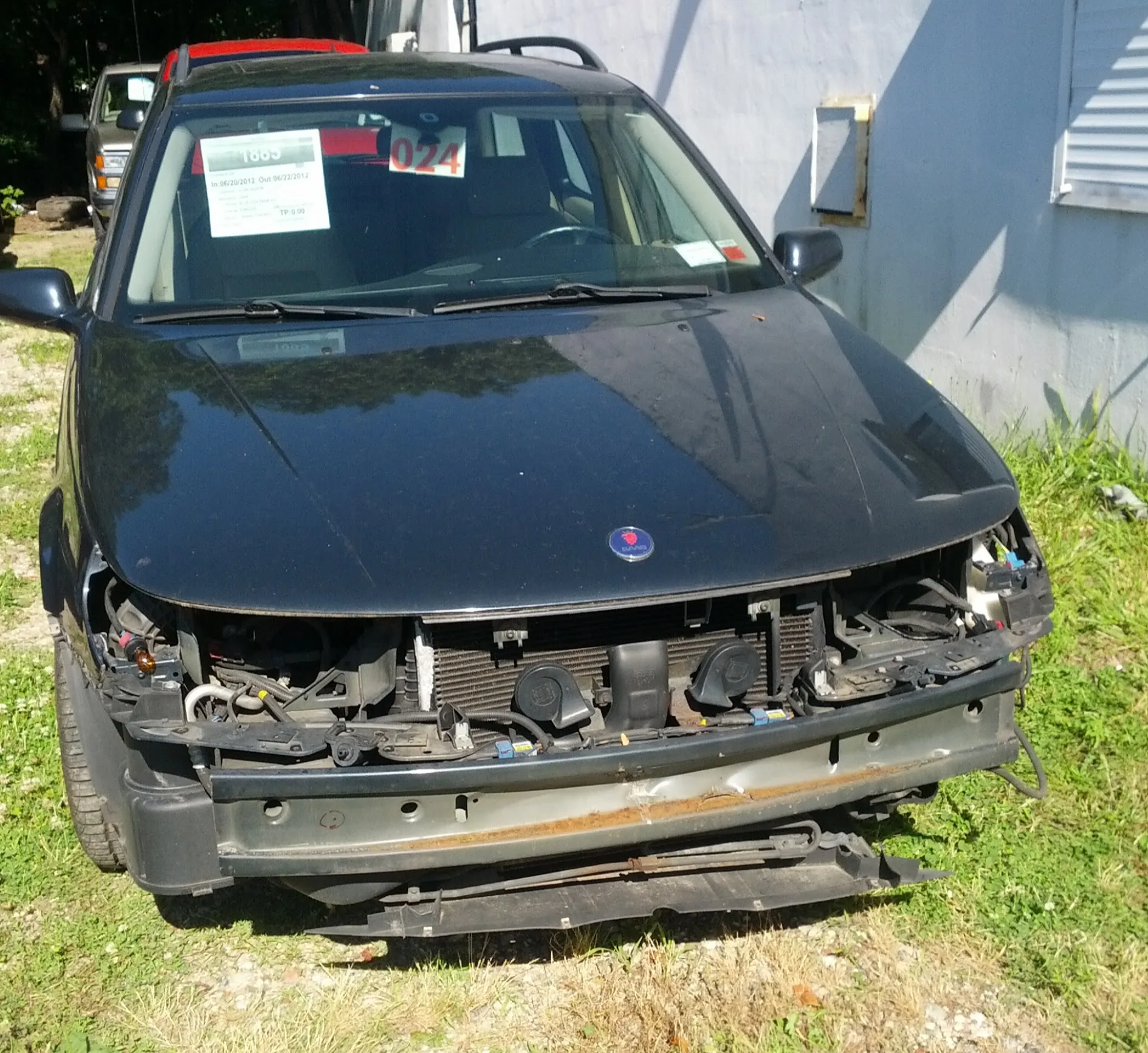
was home. When I graduated from college, my folks got the Saab a new paint job — its
brown finish had become heavily oxidized in its eleven years outside — and gave it to
me as a graduation present.
I took it with me when I moved to New York with a couple hundred bucks in my pocket and drove
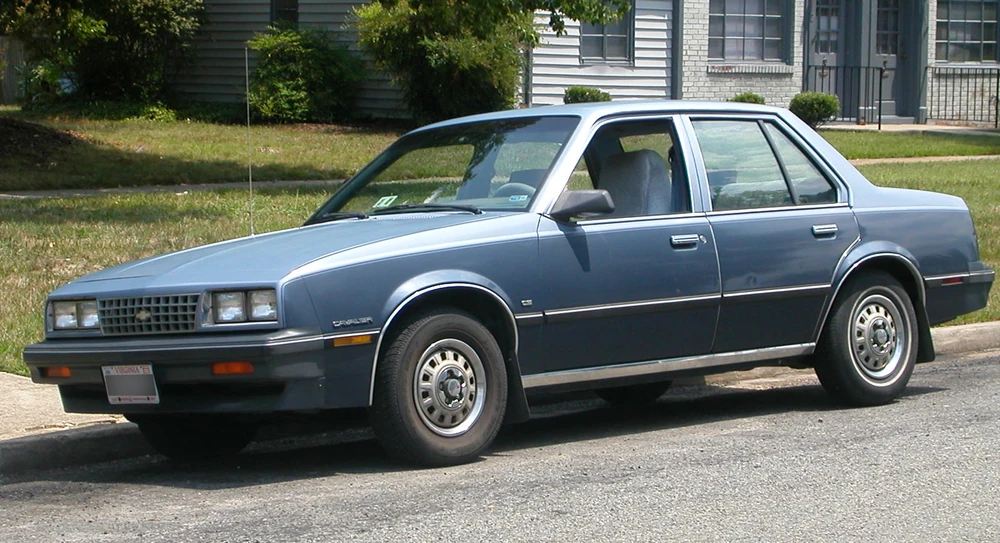
it until various electrical gremlins started materializing. My folks found a beat-up 1984
Chevy Cavalier station wagon for me in New Hampshire. I didn't have it long — it started
overheating in Queens traffic, so I traded it for a Cavalier sedan the same year. I loved
those Cavaliers, but they were objectively horrible cars. Maybe they'd just been abused, but
I never knew if I'd get where I needed to go — that was if they even started.
And actually, I credit my utter hatred for today's start/stop machinations to driving those
Cavalier junkers. Anyone who spent their younger years driving shitboxes that stalled at
stoplights and might not start again knows exactly why start/stop feels like a threat, not
a feature.
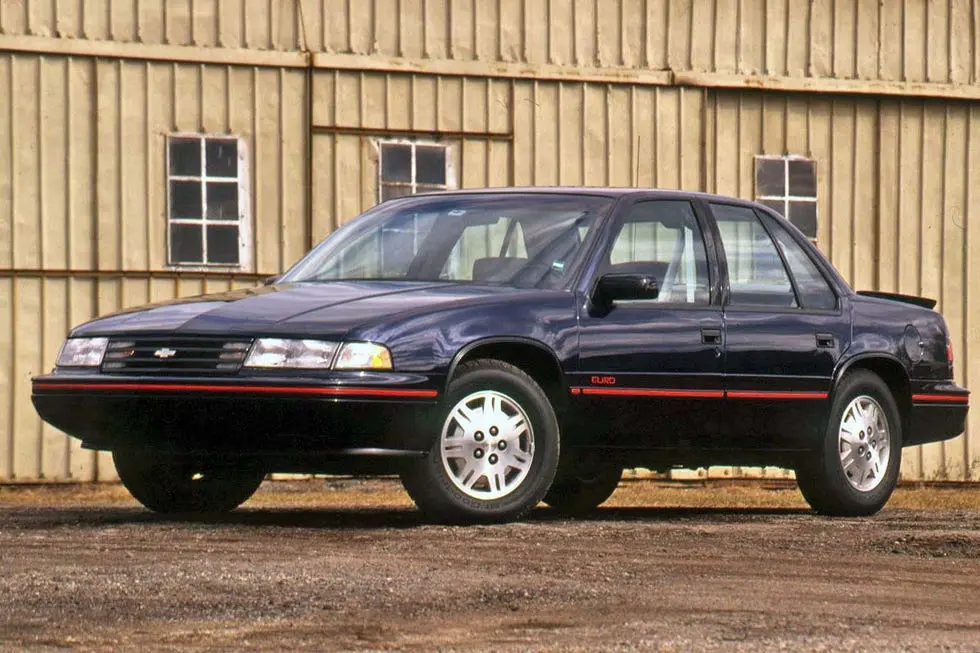
The Chevy Lumina Eurosport. Photo: Dick Kelley / Car & Driver.
Eventually, my dad was worried enough about me that he decided to buy his Eurosport when his
company replaced it, and he gave it to me. I think it had close to 160K miles on it by that
time, but it still ran great, except for the air conditioning. It was miserable in the summer,
but at least I knew it was reliable.
Around that time I decided to go back to school to study audio engineering. The trouble was
that I was also working full time on Long Island and living in Astoria, Queens, but the school
was in Manhattan. I got a line on a room in Greenwich Village from a friend and decided to
just sell the car and use public transportation because I couldn't afford to keep a car in
the City.
The Flushing Beetle
$1,200 in Flushing, Queens — and that's where it should have stayed
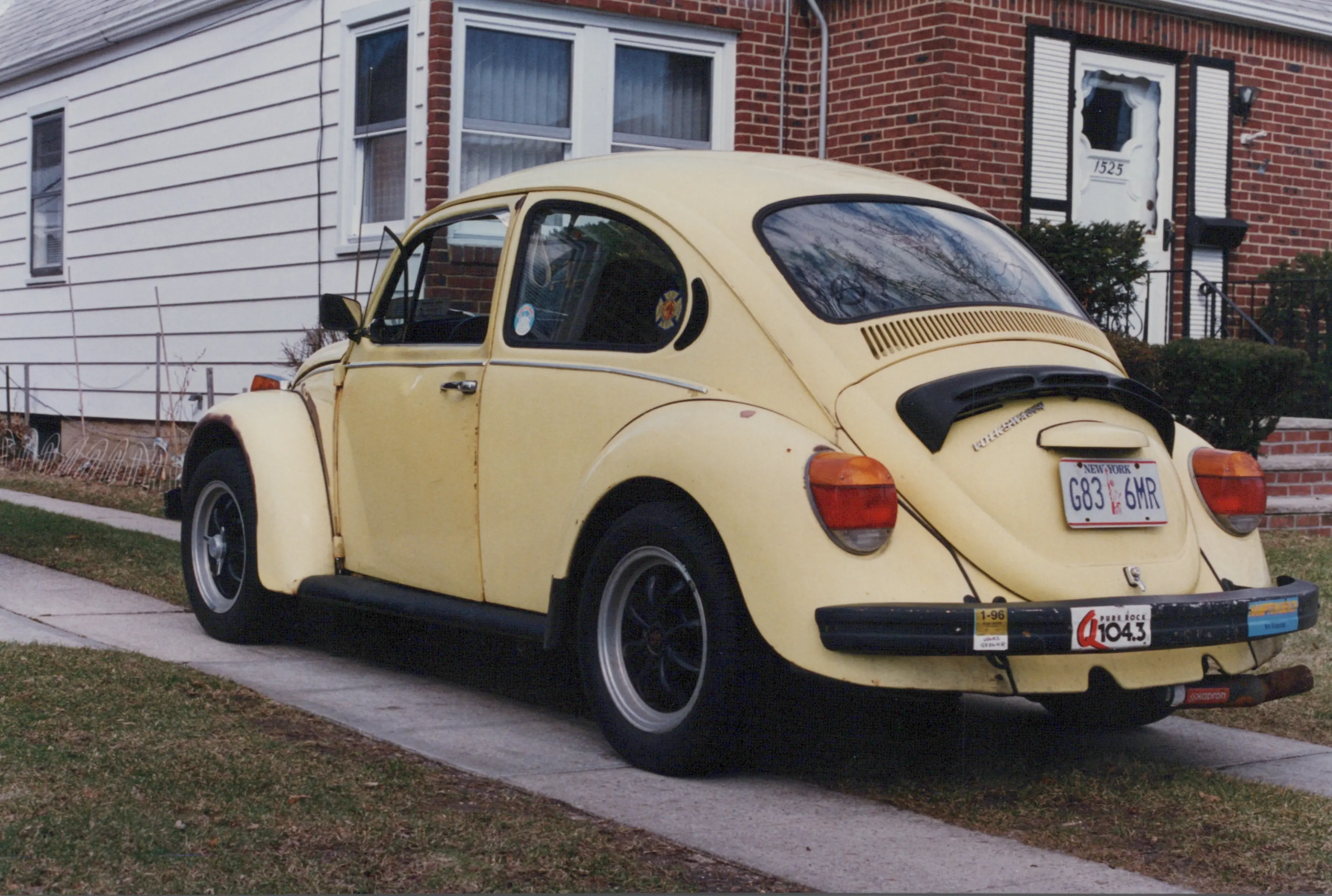
The Flushing Beetle.
After school I decided to move back to Astoria, and needed a car to drive out to Long Island
for work again — the Long Island Railroad wasn't easily accessible. I'd have had to take
two trains just to get to Woodside, where the LIRR paused on its way from Penn Station out to
Great Neck.
I don't remember why I'd gotten back into VW Beetles — it could have been because of my
best friend from high school who had gotten one — but I decided that was the next car I'd
like to get. I found one in Flushing for $1,200, and Flushing is where it should have stayed.
I had the best time of my life with the poor thing, but I didn't know what I was getting into
and it was already falling apart from years of New York road salt.
You can find that story on my other site:
The Flushing Beetle.
The Jetta(s)
A modern sports sedan — what could go wrong?
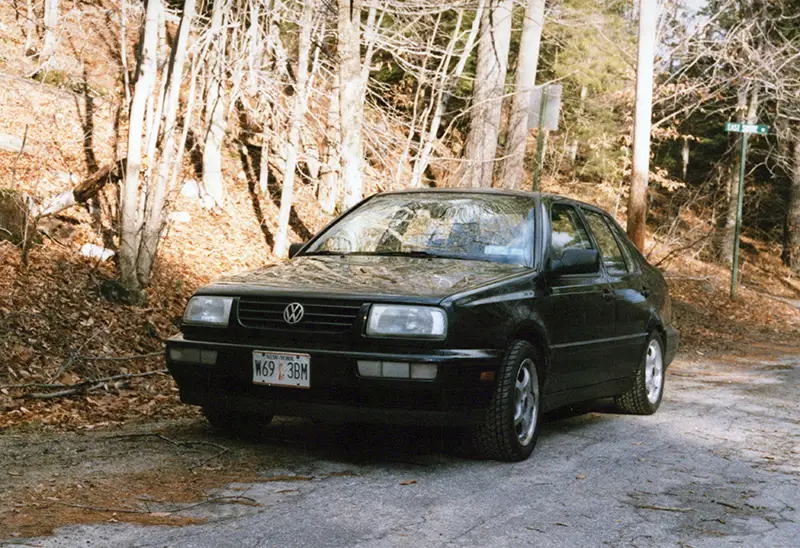
The Jetta.
I was still into Volkswagens, so a Jetta seemed like the logical next step — a modern
sports sedan. VW was offering some great deals as part of their "Drivers Wanted" campaign,
so I picked up a 1996 Jetta base model — albeit with the 2.0 four-cylinder, dubbed
the "2-slow." It was fast enough for me.
I was still living in Astoria, parking on the street. I parked the car on 31st Avenue on a
Thursday. It was a long weekend, and with no alternate side parking until the next Tuesday,
I figured I didn't have to worry about parking for a while.
Unbeknownst to me, that Friday the police had posted signs that the street needed to be
cleared for the weekend for some occasion — I don't know what, I wasn't there. Anyone
who has dealt with alternate-side parking knows that if you got a good spot where you don't
have to move your car for a few days, you'll do anything NOT to move it until you really
need to. When I went to get my car the following Monday, it wasn't
there. By this time the street had returned to its regular appearance, so I figured it had
just been stolen.
When I went to the local police precinct, they didn't say anything about the street
clearing — they just took my report, and I went back home. 30 days later, USAA paid
out the car, and I went to get another one. A 1997. Same model, same color, same everything.
Around day 40 after the "theft," I got a call from a garage down on 21st Street. They had
found my car. It had a gazillion tickets on it and the windows had all been smashed. They'd
found it on the other side of the elevated subway that ran along 31st Street — somewhere
I never parked.
"How the hell did it get over there?" The guy answered, "If I didn't know any better, I'd
say you were trying to get rid of the car."
Rid of the car? I loved that car. It's why I bought another one.
The police later told me that any cars left on the avenue that day had been dragged under
the elevated tracks and dumped away from whatever event had happened that weekend. "You
couldn't have told me that when I came here to report the car stolen?" Shrugs all around.
The Forester
A proper family car
Not long after this, I moved out to Long Island to live with my girlfriend and her son.
About a year later, her Corolla died, so we figured we'd get a family car. We ended up
with a Subaru Forester.
It's kind of odd that I don't think I have a picture of it. It was the XS, in black, with
gorgeous metallic mocha flakes that sparkled in the sunlight. The sunroof was gigantic. We
all loved it — and it proved what an all-weather beast it was when the Island was hit
with a fierce winter storm.
I was still driving the Jetta, which made it to just over 100K miles before the transmission
gave out — about six months after I'd had the clutch replaced. It was barely drivable.
I found a buyer in Washington who was happy to have it shipped across the country, bad
transmission and all, so I dropped it off at a port in New Jersey, they loaded it up, and
off it went. I don't even remember how I found the person or how they found me.
And that was the last watercooled VW I owned. It was on to Subarus and all-wheel drive power.
Back to My Roots
A 1971 VW Squareback, a broken ring, and a top-end rebuild
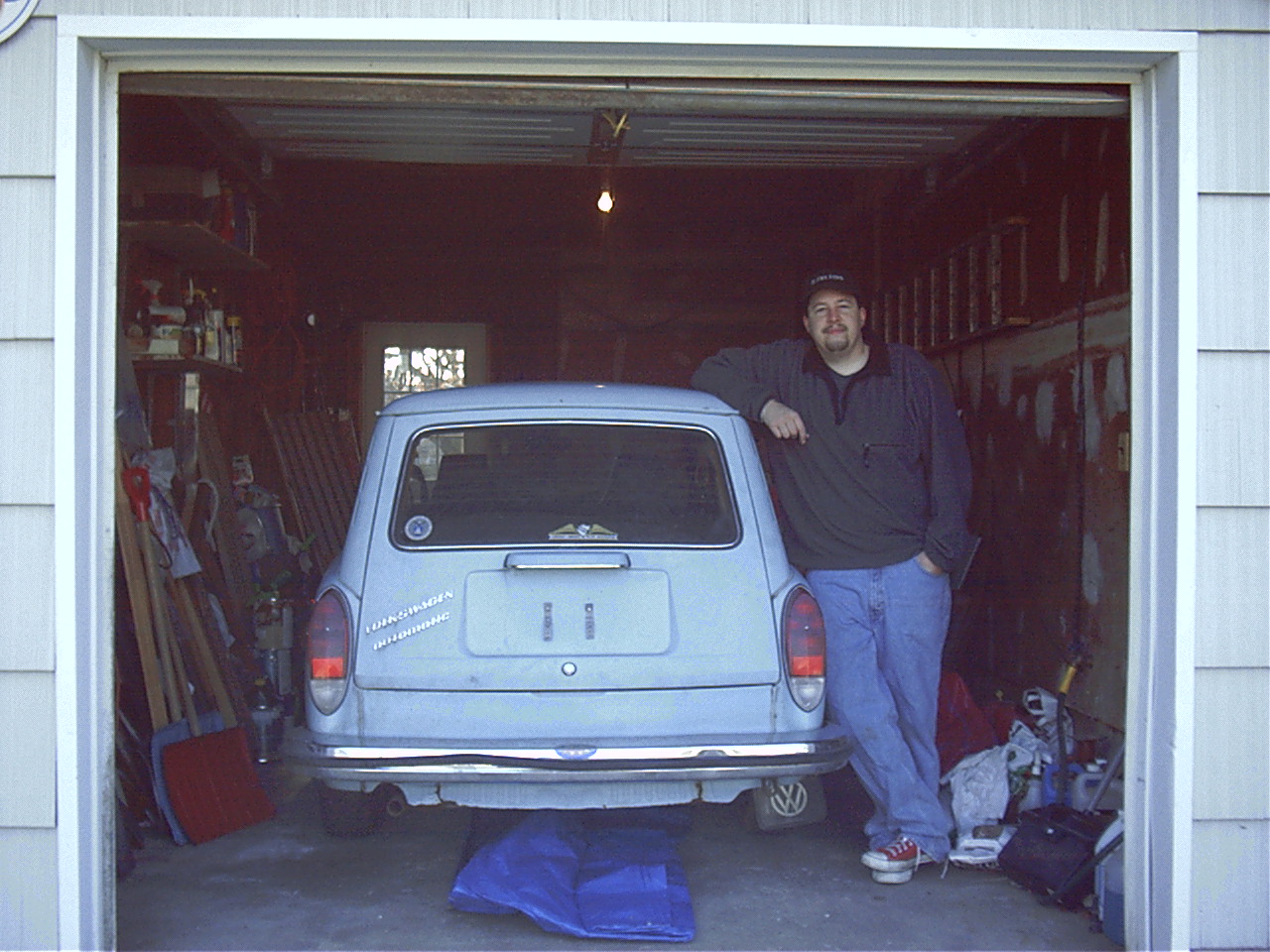
The '71 Squareback in the in-laws' garage.
I was done with watercooled VWs, but I'd always wanted to start working on my own cars. Having
learned more about my Beetle after its engine grenaded, I figured I'd go back to my roots and
pick up my own Type III Squareback. I found one in pretty good condition in upstate New York
for $1,000, but it wasn't running. That was fine — rust was the real issue — I just
didn't want rust. I'd figure out a way to get the engine running again.
My brother-in-law helped me drag it back to Long Island, and my in-laws agreed to let me keep
it in their garage and work on it on nights and weekends. I eventually rebuilt the top end of
the engine after discovering the compression in one cylinder was really low — turned out
to be a broken ring — and got it running again.
When my wife and I bought a house, the car moved into our garage, and I'd work on it when I
could, which turned out to be not much. I ended up selling it and a parts car I'd picked up,
and that was it for aircooled VWs for a while.
The full Squareback story is on my other site:
The '71 Squareback.
The Saabaru
AWD, a manual transmission, and a badge-engineered gem
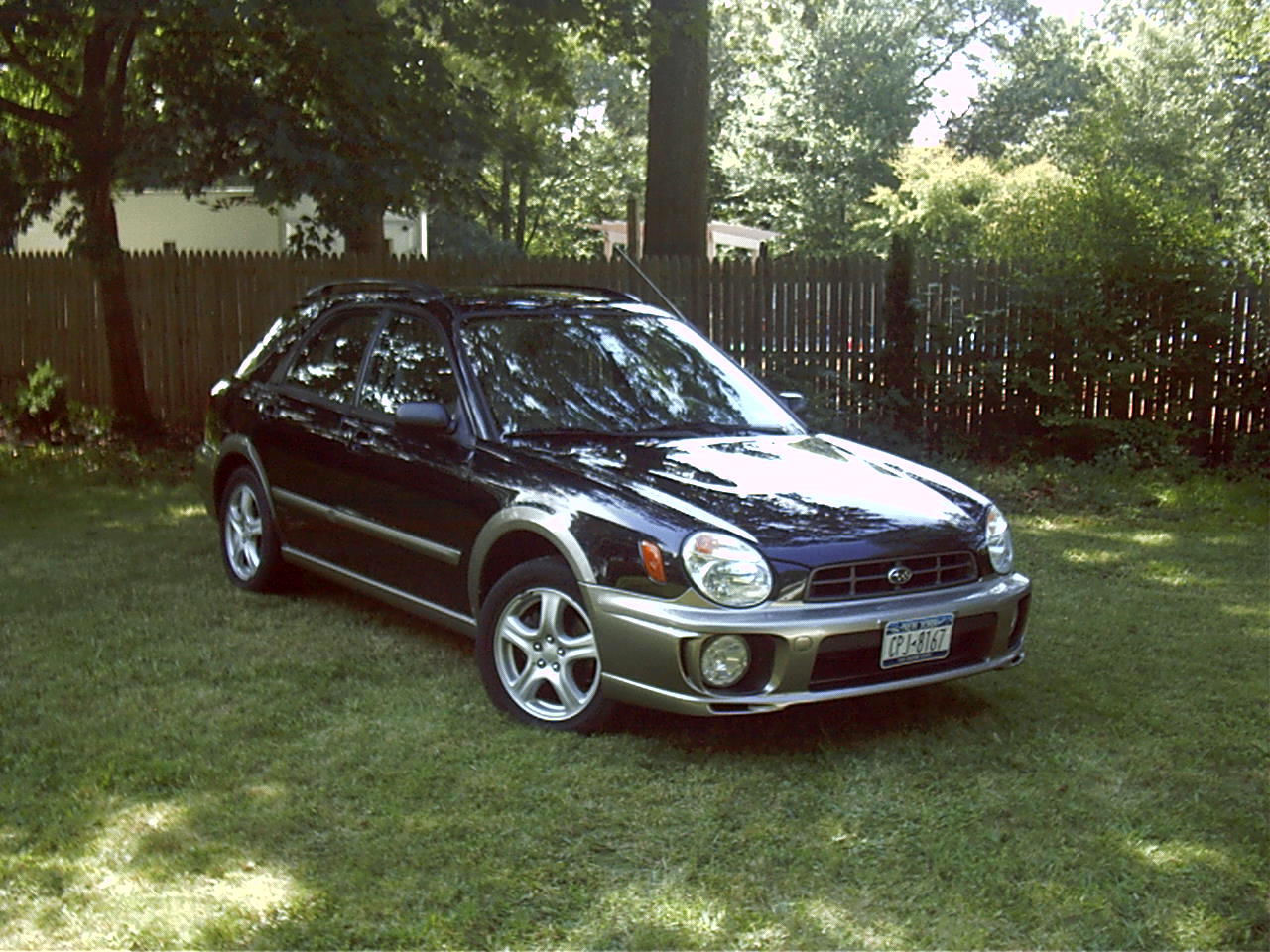
When the Jetta died, my new daily driver became a Subaru Outback Sport. It was fun having an
AWD car, but I missed a manual transmission a lot more than I thought I would. I didn't have
this one long.
Saab had just released their 9-3 SportCombi, and I thought for sure that would be my next car
— that was until I drove it. Something about the drive didn't sit with me well. The
Subaru actually felt more solid.
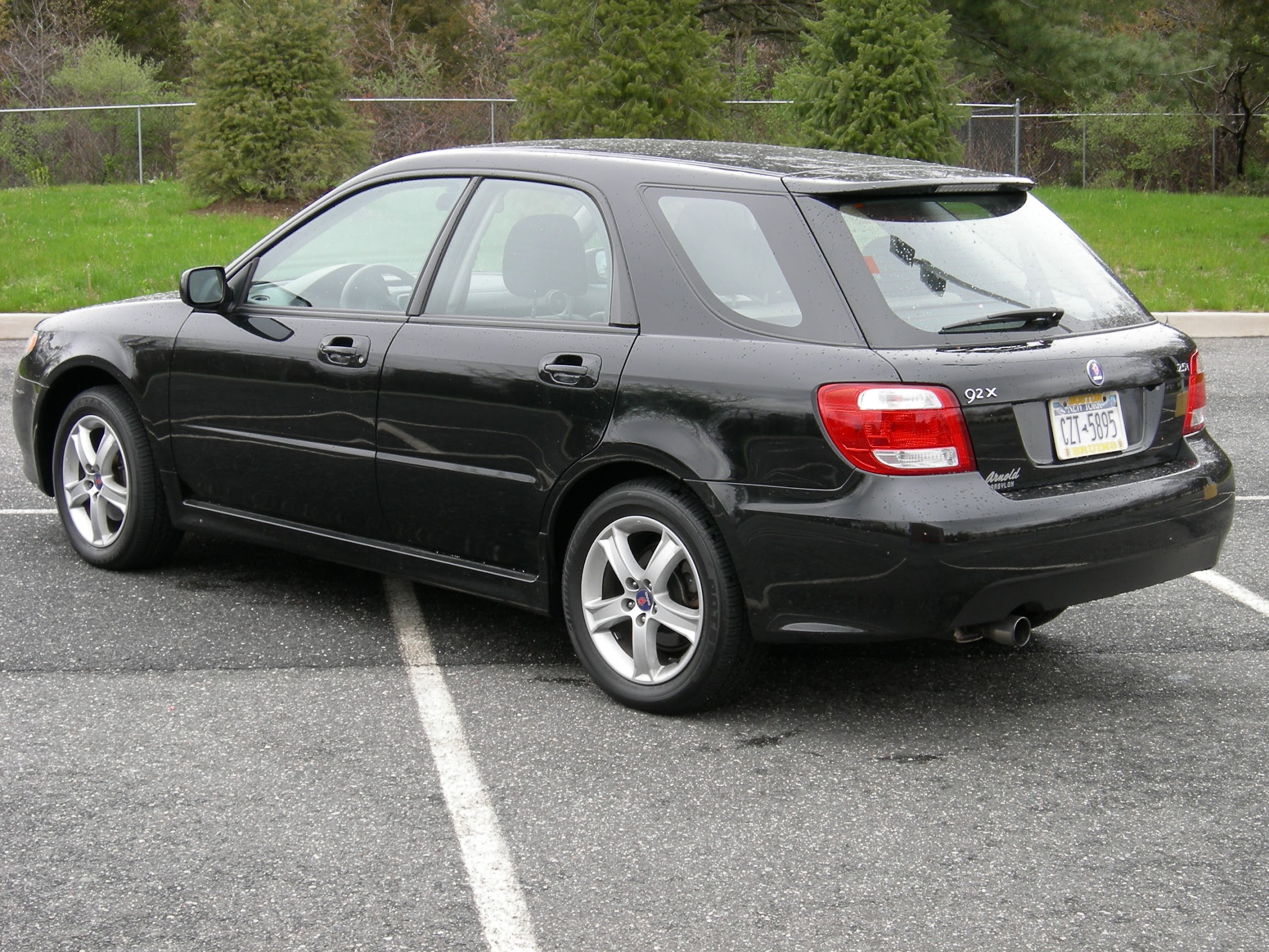
Luckily, Saab offered basically the same car I was already driving, but sport-tuned. I picked
up a 2005 Saab 9-2X — a pretty good deal, since they weren't selling well here (were
they selling well anywhere?). It was loads of fun, even though I could only afford the 2.5i
instead of the Aero (no turbo). At least I had my manual transmission back, and the suspension
was so much better than my Outback Sport had been.
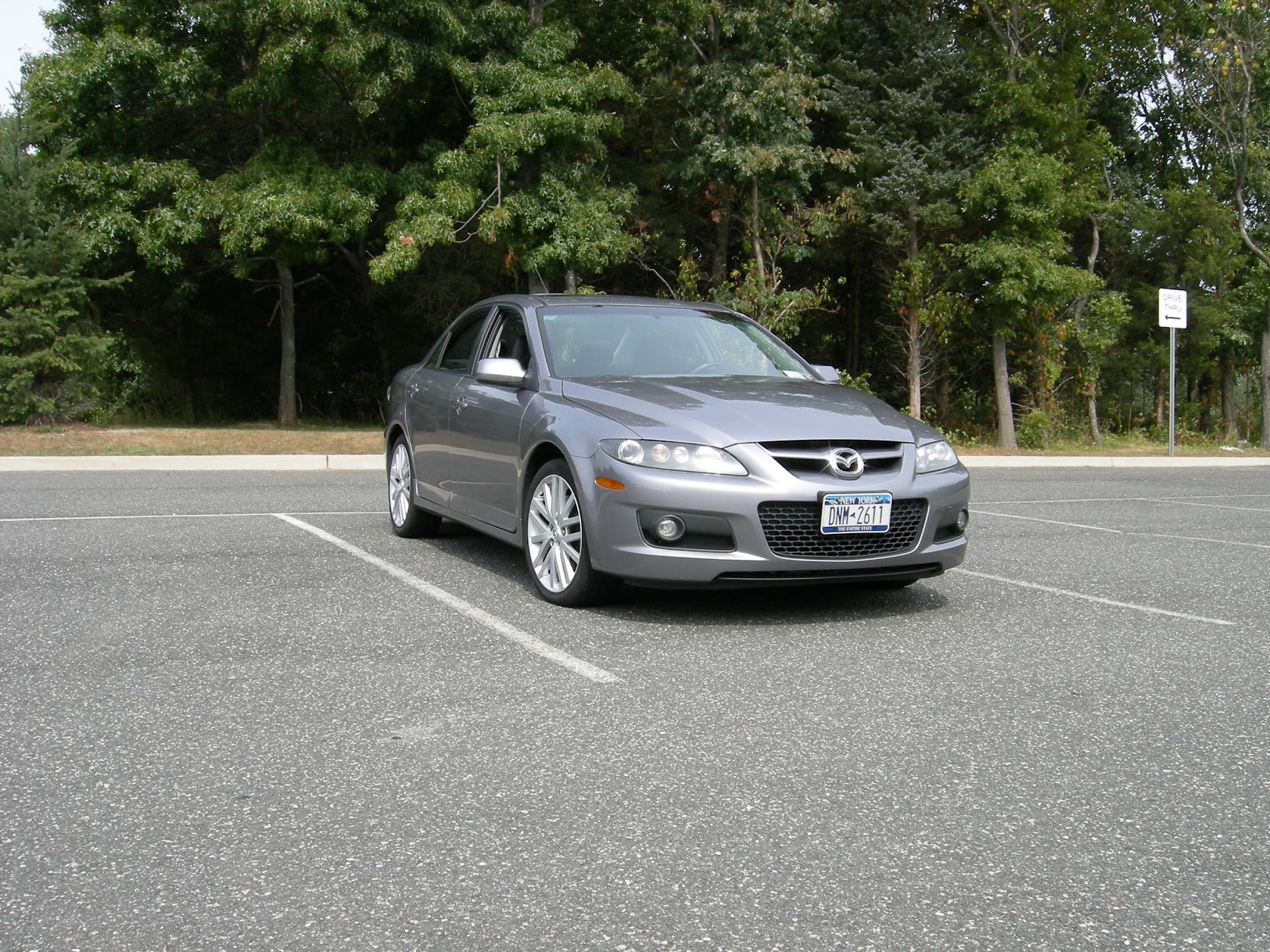
The Mazdaspeed6
Turbocharged, AWD, 6-speed manual — and a cop magnet
We were essentially a Subaru family. One Forester, one Saab 9-2X (mostly a Subaru). A friend
at work got a WRX and after driving it, I started trying to figure out a way to get one. You
can call this my “stupid with money” phase, as I was turning in cars as soon as I
barely got bored of them. A WRX was going to push the budget to the max, but then I got wind
that Mazda was releasing this “grown-up” WRX — a turbocharged AWD 274hp
Mazda6 that made 280 pound-feet of torque and that only came with a 6-speed manual, all for
about the same price as a WRX, which had one less gear and made less power. I sold my 9-2X to
a nice couple from Connecticut, and picked up the Mazdaspeed6.
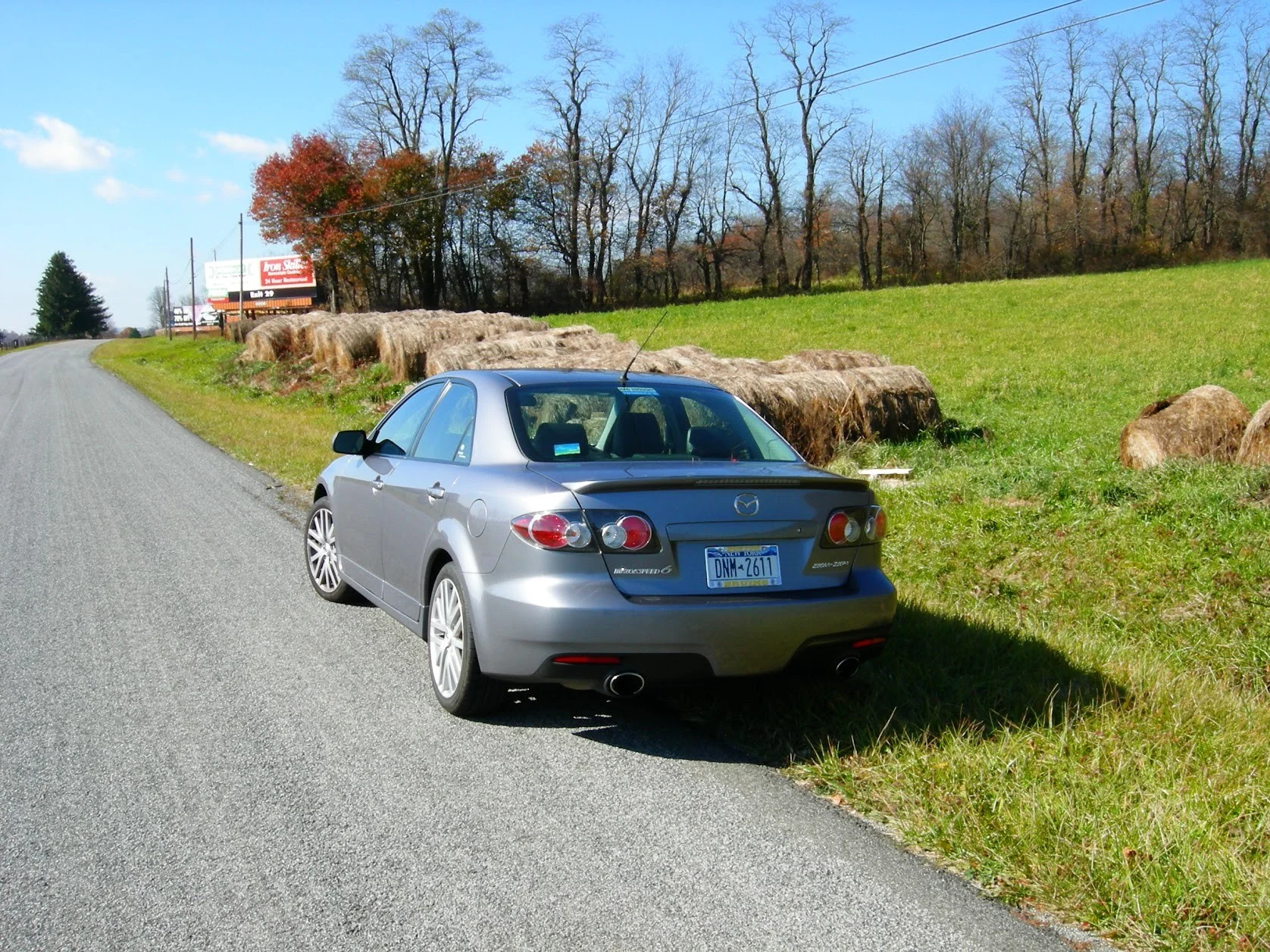
I always thought the car looked fairly non-descript, but in my 56 years of life, no one ever
mentioned my cars out in public more than they did that one. People at the gas station, people
at drive-through windows, and the cops — yeah, the cops loved pulling me over in it,
even though I drove it exactly the same as I had every other car I'd ever owned.
One day, my wife, stepson and I were lost in some upscale neighborhood in Connecticut and we
(horrors) stopped to ask this older guy who was walking his dog for directions — this was
before smartphone ubiquity and I didn't have a GPS. He told us where the nearest main road was,
and asked, “Is this that special Mazda?” I smiled. Yup. It sure was. But it was
costing me too much. My stepson got on my insurance when he turned sixteen, and I realized I
needed something with a much lower monthly payment and something that was less costly to insure.
The Saab Years
A wagon, a dream car, and a daily driver — all from Trollhättan
Around this time, my stepson had started using the Forester regularly, and we needed a
replacement family wagon. The local Saab dealer had given me a 9-5 as a loaner when the 9-2X
had been in for maintenance, and my wife and I had both liked it, so I started looking around
at listings for CPO 9-5s, which seemed to be a really good deal since they were not a
mainstream car. People who wanted European cars got an Audi or BMW, and if people wanted a
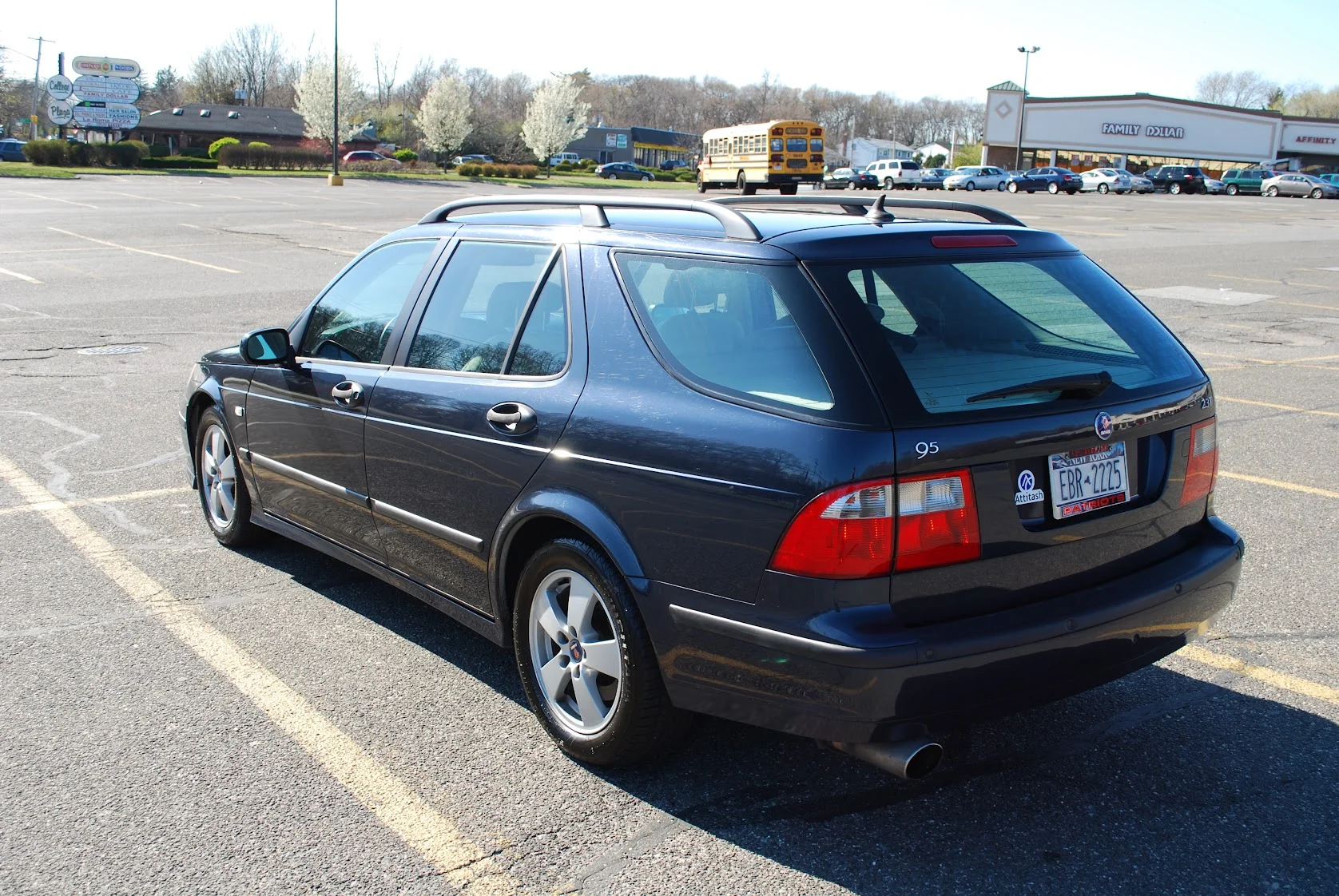
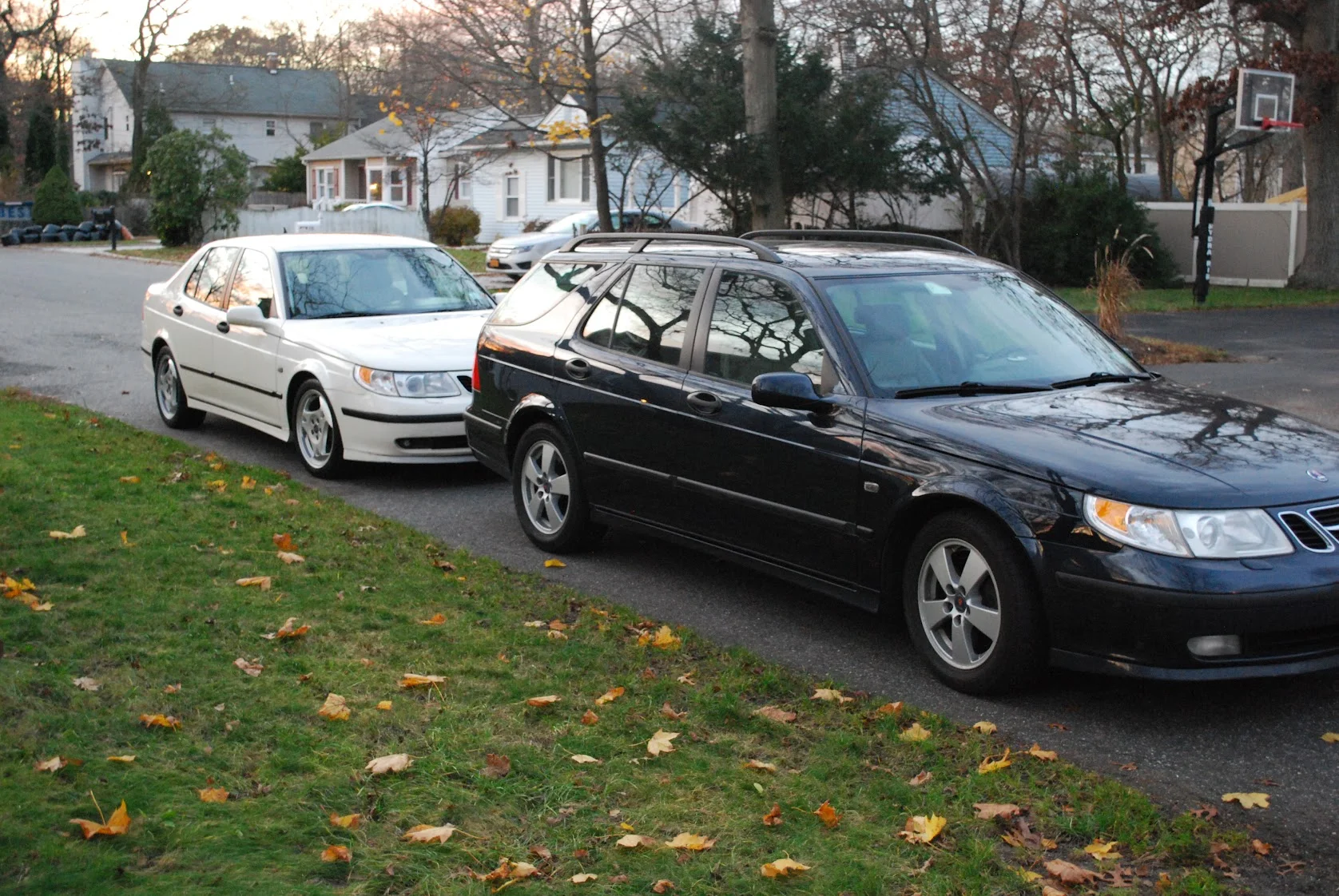
Swedish car, they'd usually get a Volvo. Their loss, my gain. I found a 2004 9-5 Arc Wagon
up in Massachusetts with under 30K miles on it, and it became our new family car.
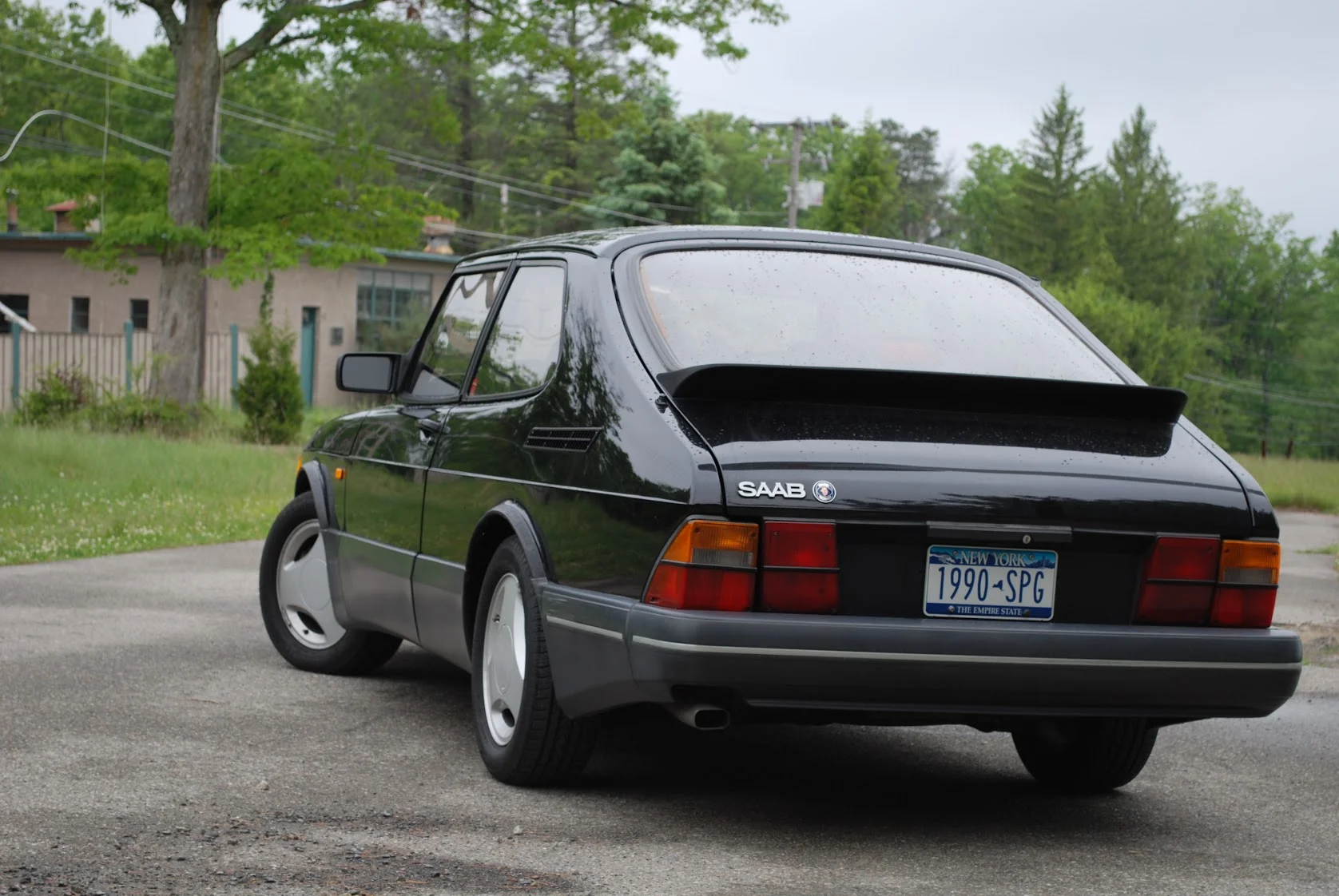
Not long after, I started looking for the Mazdaspeed6's replacement — a second-hand car
that wouldn't break the bank, and that I could likely do some of the work on myself. Around
this time I'd also stumbled on a local classic Saab mechanic a few towns over — he had a
whole parking lot full of 900s and other assorted Saabs tucked away off the main drag. In my
price range was a well-cared-for Saab SPG that was up for auction in Pennsylvania, a few hours
drive away. It was cheap enough that I decided to take a chance on just buying it from the
listing alone. I won the auction, and we took the 9-5 to meet the SPG and bring it home.
That was our fleet for maybe a couple of years? The SPG had some rust repair, got a Red Box
CPU upgrade, and was somewhat high maintenance. I started stressing about things going wrong
and how I'd have to stockpile parts again. One of the reliefs of getting rid of the Type IIIs
had been knowing I wasn't trying to maintain a car that was difficult to get replacement parts
for. The SPG was a blast to drive, and I feel so fortunate that I was able to finally drive one
of the cars I only dreamed of having when I was a kid, but it was starting to take nights and
weekends from me when things needed fixing.
I needed a reliable daily driver, so when a 9-5 Aero sedan with a manual transmission went up
for sale on a Saab forum I was on, I decided to buy it. I think it's still one of my favorite
cars I've owned. It had so much low-end grunt, shifted so smoothly, and was just a really nice
commuter car 60 miles on the Long Island Expressway every day.
The End of Saab
A financial crisis, a bankruptcy, and a long drive home from Chicago
In 2008, the U.S. housing bubble burst, triggering the worst financial crisis since the Great
Depression. Banks that had gorged on subprime mortgage-backed securities collapsed or needed
emergency bailouts — Lehman Brothers went under, Bear Stearns was fire-sold to JPMorgan,
and AIG required $182 billion in government rescue funds. Millions of Americans lost their
homes, their retirement savings, or both. The auto industry was hit especially hard — GM
and Chrysler both filed for bankruptcy and took government bailouts to survive. As part of GM's
restructuring, they shed Pontiac, Saturn, Hummer, and Saab.
Bob Lutz, GM's Vice Chairman, later
told Motor1:
“I had been trying to convince my boss at GM for years we should get rid of Saab, and it
was always wait until next year, wait until the next year, wait until next year — and next
year never came. It was a goofy brand that was off the mainstream, and every time it was made
more mainstream, we didn't sell any. And when it was goofy, which the automotive press loved,
there were only 100,000 people in the whole freakin' world that wanted one.”
Saab was almost sold to Koenigsegg, but the deal fell through, and Spyker was there to pick up
the pieces, with grand promises of a reborn Swedish marque.
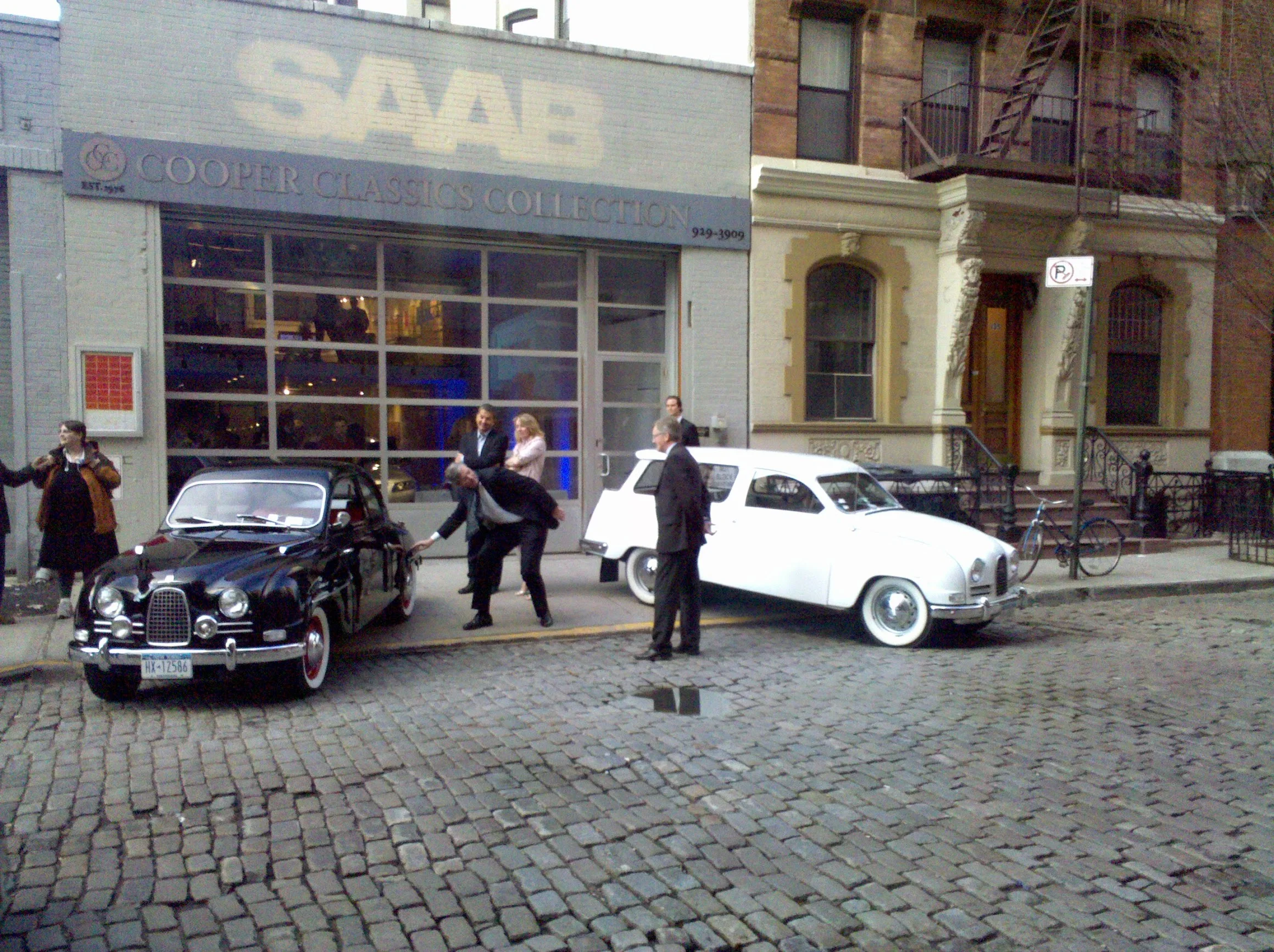
2010 9-5 Release Gathering - NYC.
But as Spyker's cash flow situation deteriorated trying to keep Saab alive, and a final
injection of cash from Chinese investors was vetoed by GM — who didn't want their
technology tied up with the country — it became clear the company wasn't going to be
around long. Simple items like key fobs suddenly became difficult to obtain. I decided that
after having far too many cars with parts that became hard to source (due to age or the
manufacturer's bankruptcy), I wanted something more common — something easier to fix
cheaply if it broke, and something that was less expensive if it needed a repair I couldn't
do myself.
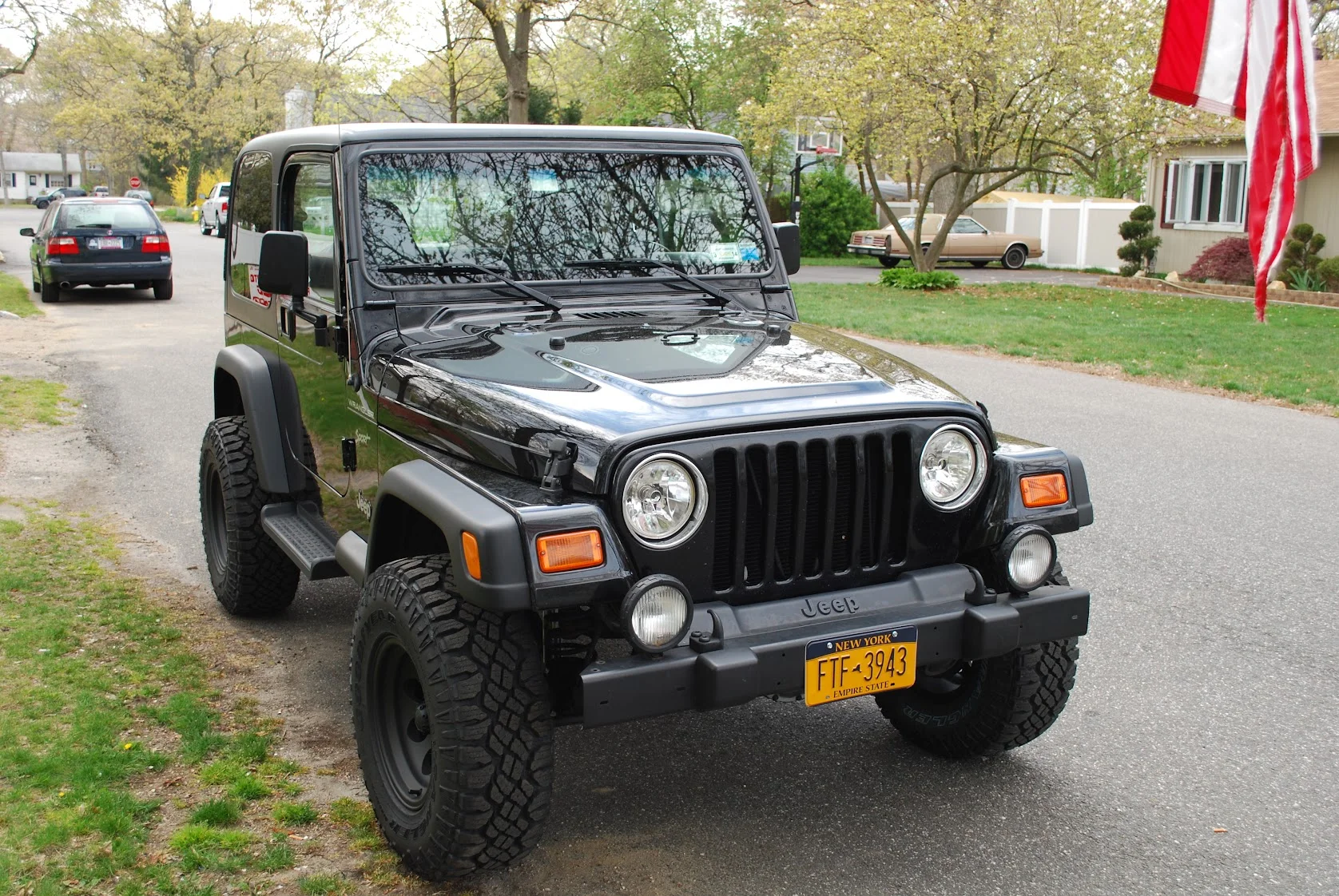
I'd been out of Jeeps for a while, so I started thinking maybe a Wrangler would fit the bill
for my daily driver, and I'd sort the family wagon out later. There was an outfit just outside
of Chicago that specialized in selling gently used Wranglers, so I found a nice TJ with the
4.0L inline-6 and a manual transmission, bought a plane ticket, and drove it home.
When I'd driven my dad's CJ-5 every day and taken the doors off in the summer, there was a
motion I guess I did every time I got out of the Jeep — turn off ignition, stamp foot on
parking brake pedal, hop out. Want to know how strong muscle memory is? The first day I drove
the TJ to work without the doors, I got to work, found a parking spot, turned the key off, and
went to stamp the parking brake with my foot (the TJ has a handbrake). It had been around 25
years since I'd driven that CJ-5 with its doors off. Crazy.
The Lemon
A Grand Cherokee that didn't love us back
We also started keeping our eyes out for something that could replace the Saab wagon when the
time came. That year at the NY Auto Show, I wanted to check out the new Wranglers. My wife
took an interest in the Jeeps on the floor and asked, “How come we're not looking at
Jeeps?” It was a good question. We soon started looking at Jeeps. The 4-door JKs had
enough cargo room, but when my wife drove one back-to-back with a Grand Cherokee, it was no
contest — for a daily family hauler, the GC was the ticket. My wife says it was the first
vehicle that made her understand why people fall in love with their cars. We both loved it.
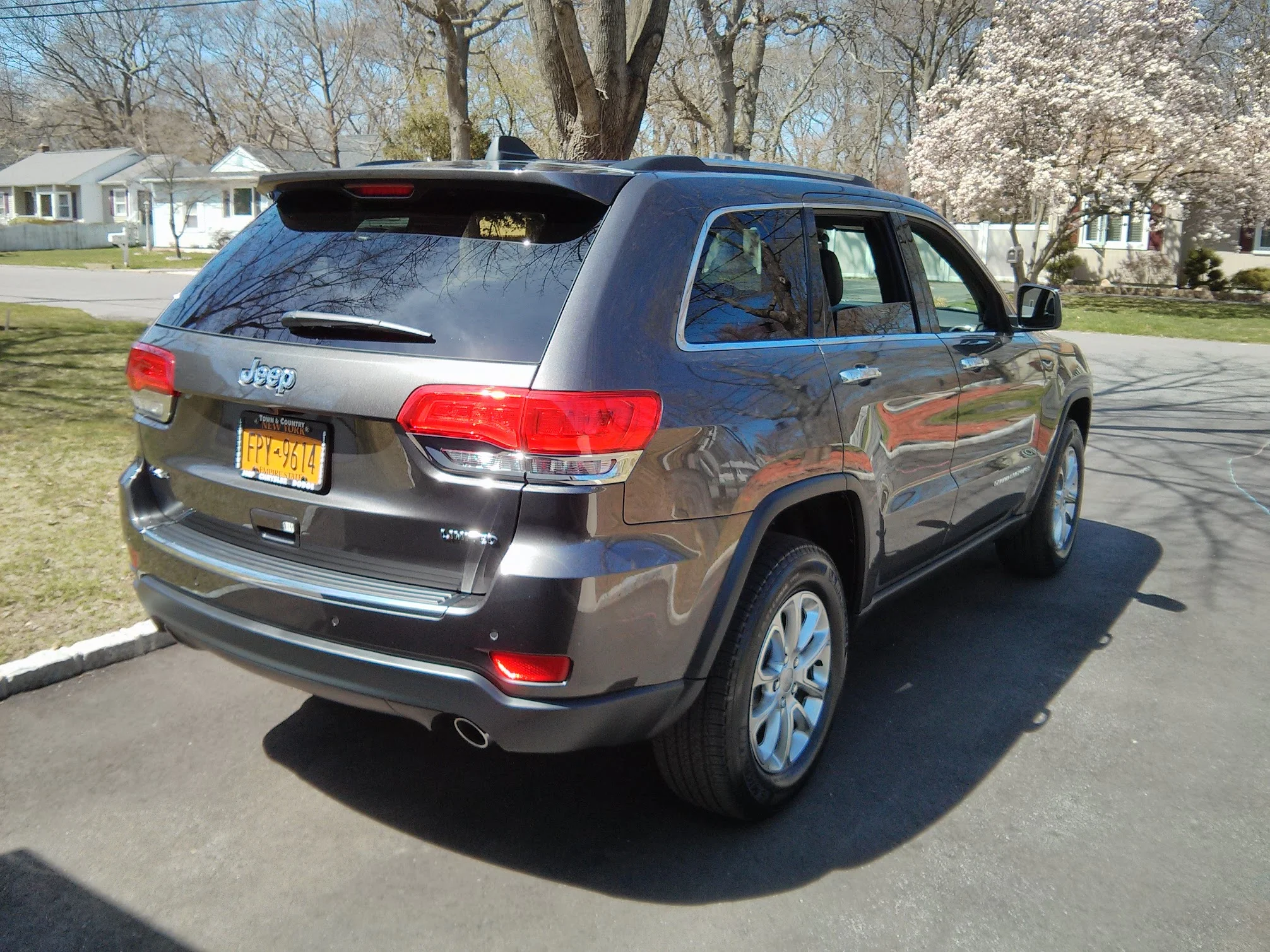
Unfortunately, it didn't love us back. One night I wanted to take it out for a ride. It had 300
miles on it. I got it out of the driveway and it stalled. I thought I had messed up something
with its
ridiculously tricky gear shift
— I could never seem to get it in the right gear. It started right back up, so I didn't
really think much more of it until I pulled out onto the expressway service road and the vehicle
just stopped in the middle of the road. I was in a dark section of the road, and I couldn't
even turn on my hazards. I got out of the vehicle because I thought someone might not see it,
and hit it.
I called Jeep Roadside, but they didn't even have my VIN in the system yet. They weren't going
to help me. I called a tow truck on my own, figuring I'd sort the rest out later. While I was
waiting, I got in and tried to start it again. It started fine. I pulled it to the shoulder and
the tow truck eventually took it away.
What followed was three months of getting the vehicle back “fixed,” and it dying
again in traffic, usually with my wife and son in the car. The dealer would put another couple
of hundred miles on it, testing to see if it was fixed, and not having a problem would give it
back to us, and it would die again. “Jeep Cares” didn't, and I was told the
regional service manager for Jeep was pushing back hard on an exchange for a different vehicle,
claiming, “This is a simple warranty issue — they can keep bringing it back, and
we'll keep trying to fix it.” When I heard that, I hired a lemon law attorney. Within a
month, I turned in the Jeep to the dealer, and Chrysler wrote me a check for everything I had
paid into the vehicle and the rest of the loan. For what we went through with that vehicle, it
wasn't enough.
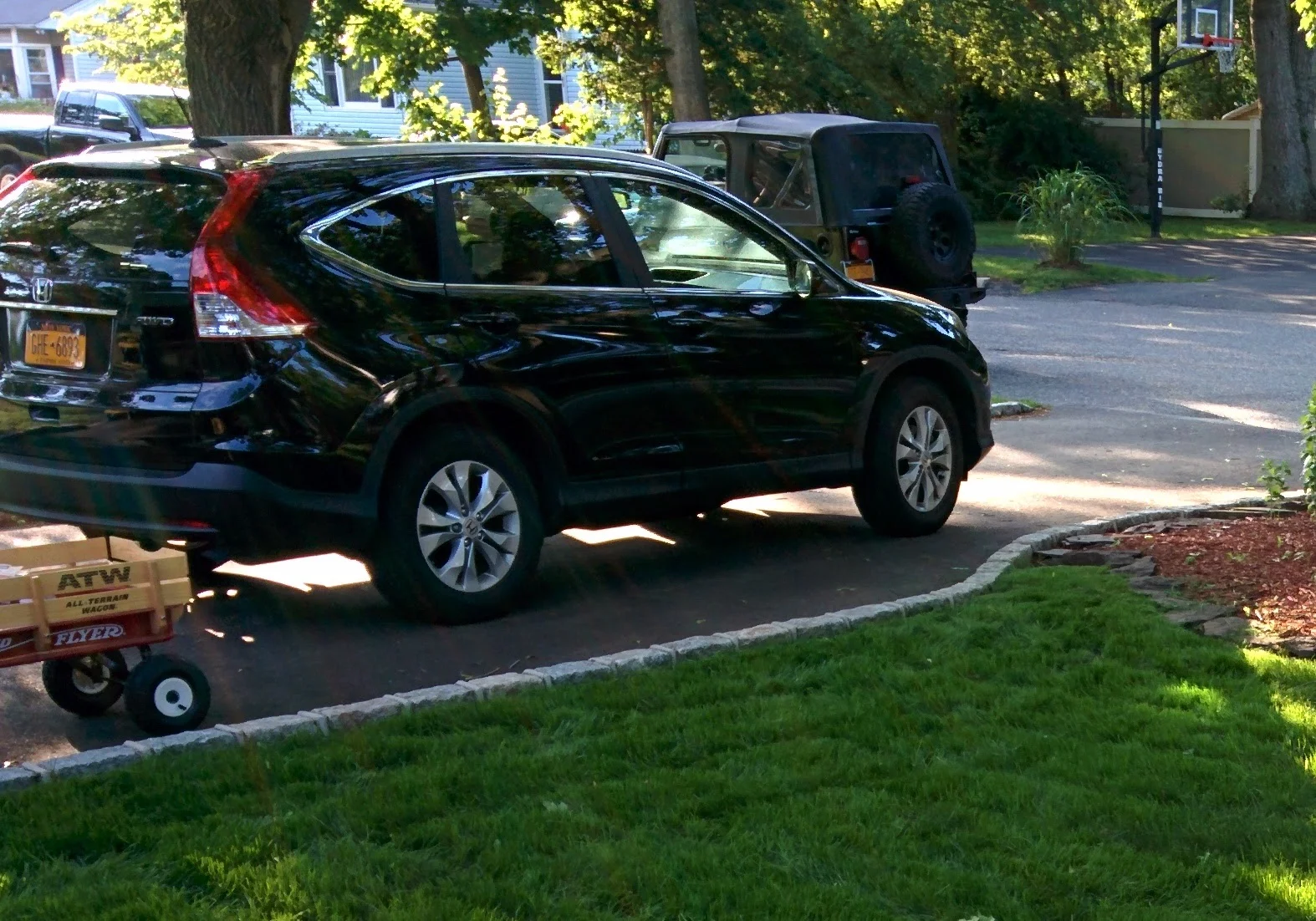
Honda CR-V — The Safe Choice.
I needed a safe vehicle that was tops in reliability. It was time for boring. We settled on a
CR-V. I had Honda snowblowers, lawnmowers, and a generator — all that never failed to
start and always ran great. So why not a Honda crossover? In fact, it was so boring, this is
one of the only photos I think I took of it in 36 months of leasing. SO boring. And it was
great.
Goodbye, Wagon
A distracted driver, a hard hit, and an unexpectedly generous payout
The 9-5 wagon had been listed for a while. I was driving it back and forth to work every once
in a while just to keep it in active rotation. No one was interested in it, so I kept lowering
the price little by little. I figured someone would want it at some point.
Unfortunately, on the way to work one morning, someone stopped short in front of me on a main
road with a 50 mph speed limit. Traffic usually moved pretty quickly. I stopped about a half a
car length from the person, and when I looked in my mirror, the woman approaching me very fast
was looking down at her phone. I pushed hard on the brake and will never forget the look on her
face as she looked up just in time to see me stopped right in front of her. She hit me hard,
and pushed me into the car in front of me. That was it for the wagon that had served us so
well. The adjuster totaled it, and paid me out more than I had been asking for in my ad. Lucky
break for me, not so much for my poor Saab.
The Acura
A sharp wagon, Honda's ACE safety design, and another crash
When the lease was up on the CR-V, we looked at getting another Honda, but wanted something
just slightly more upscale. Acura had just released its TSX SportWagon (basically, a European
Honda Accord Wagon). It was built in Japan, and was getting great reviews. My wife and I drove
one and loved it. I remember reading about all the safety features, particularly in light of my
recent accident. With Long Island roads increasingly consisting of giant SUVs, I was a little
cautious about putting my family back in a wagon instead of something that sat up a little
higher, so when I started reading about Acura/Honda's ACE design philosophy, I was interested.
We ended up with a sharp black one, but again, not for long. My wife was taking me to a
doctor's appointment when a Nissan Xterra blew a red light on the expressway service road and
we pretty much hit him dead on. The Acura did its job and saved us both — we walked away,
again, just a little shaken.
The JK
The one I'll miss the most
Mom got sick and went in the hospital, and I took the TJ 300 miles to stay with Dad and drive
him back and forth to the hospital so we could visit her. Eventually, she got well enough so I
was able to head back to New York, but driving back in a windstorm reinforced what a not-great
daily driver the TJ was. It was also starting to rust out around the windshield channel and on
the back quarter panels. I figured there was some cash outlay coming soon, and I should probably
look at something newer. I'd heard the JKs were easier to drive as well.
I found a CPO 2012 JK with 65K miles on it at my local dealership that nobody else seemed to
want — a 2-door manual that had been sitting a while. One owner, clean Carfax, regular
maintenance done — exactly what I was looking for (a Wrangler someone else had enjoyed
driving). I picked up the JK and sold the TJ.
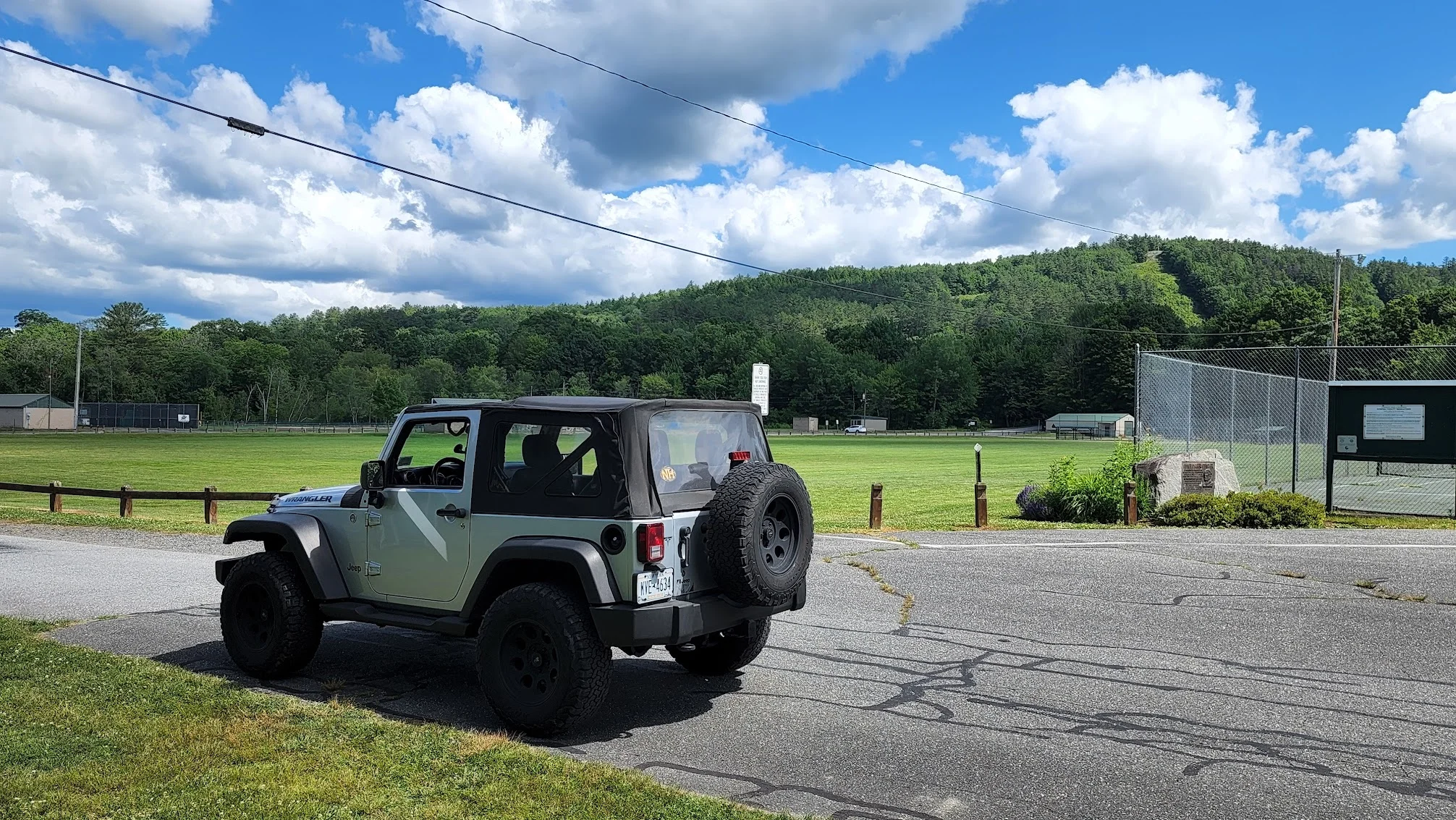
I'll miss you most of all, JK.
It's still probably my favorite vehicle ever. It never let me down, it made easy work of the
terrible NYC metro area roads every time I ventured into the city for a show, and it was just a
joy to drive every day. We just had 28” of snow this past weekend, and I parked it on the
lawn to get it out of the road. The only snow I cleared out in front of it was where the plow
had made a pile by the side of the road, and it just easily crept out of its spot in 4L and out
into the street, easy-peasy. I might have had it longer than any other vehicle to date as well.
Lots of great memories in this one, including one of the last drives in the country I ever took
with Mom. By June of 2022, I had been going up every few weeks to be with her and Dad as her
health declined from complications of Lewy Body Dementia. We lost her June 14th, 2022, a few
months before her 80th birthday. Miss you, Mom.
Second Chance
A Grand Cherokee redemption, and back to Subaru
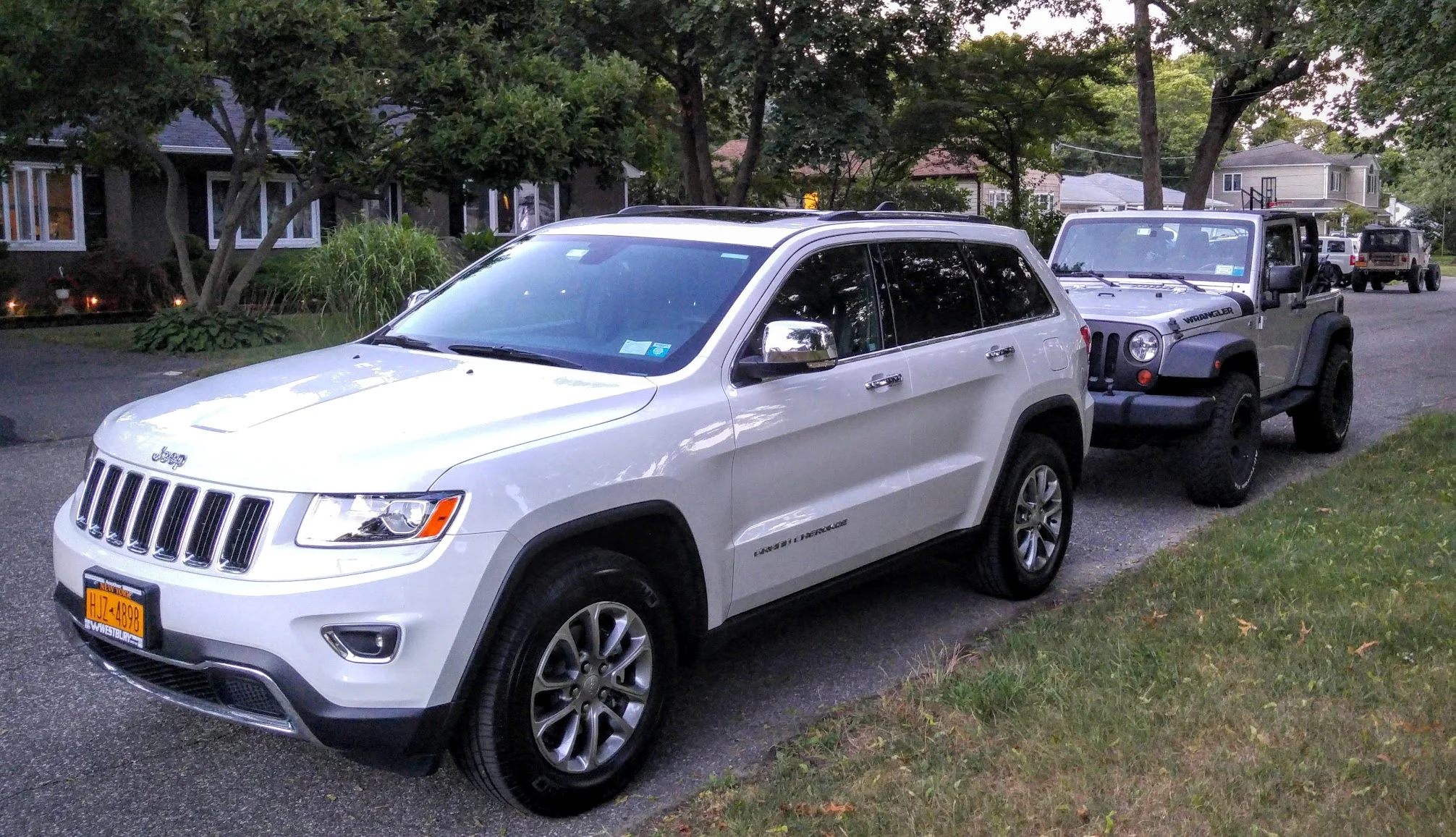
By 2016, the trauma of our former Grand Cherokee had mostly faded and my wife and I were left with mostly good memories about how much we loved the actual
vehicle. We figured the 2014 refresh was responsible for whatever glitches our Jeep had, and
were ready to try another. The result was a 2016 Grand Cherokee.
Three years,
no issues. It was the experience we had hoped we were going to get the first time.
We'd have stayed a Jeep family at the end of that lease, but by 2019, Jeep had priced us out
of the market. We cross-shopped a CR-V with a Forester, and when my wife and I saw the Forester
Sport in white and orange, all it took was a quick test drive to convince us both that this was
our next family wagon. I used a car buying service who got us a great deal on one in
Connecticut, and my son and I took an Amtrak up to get it.
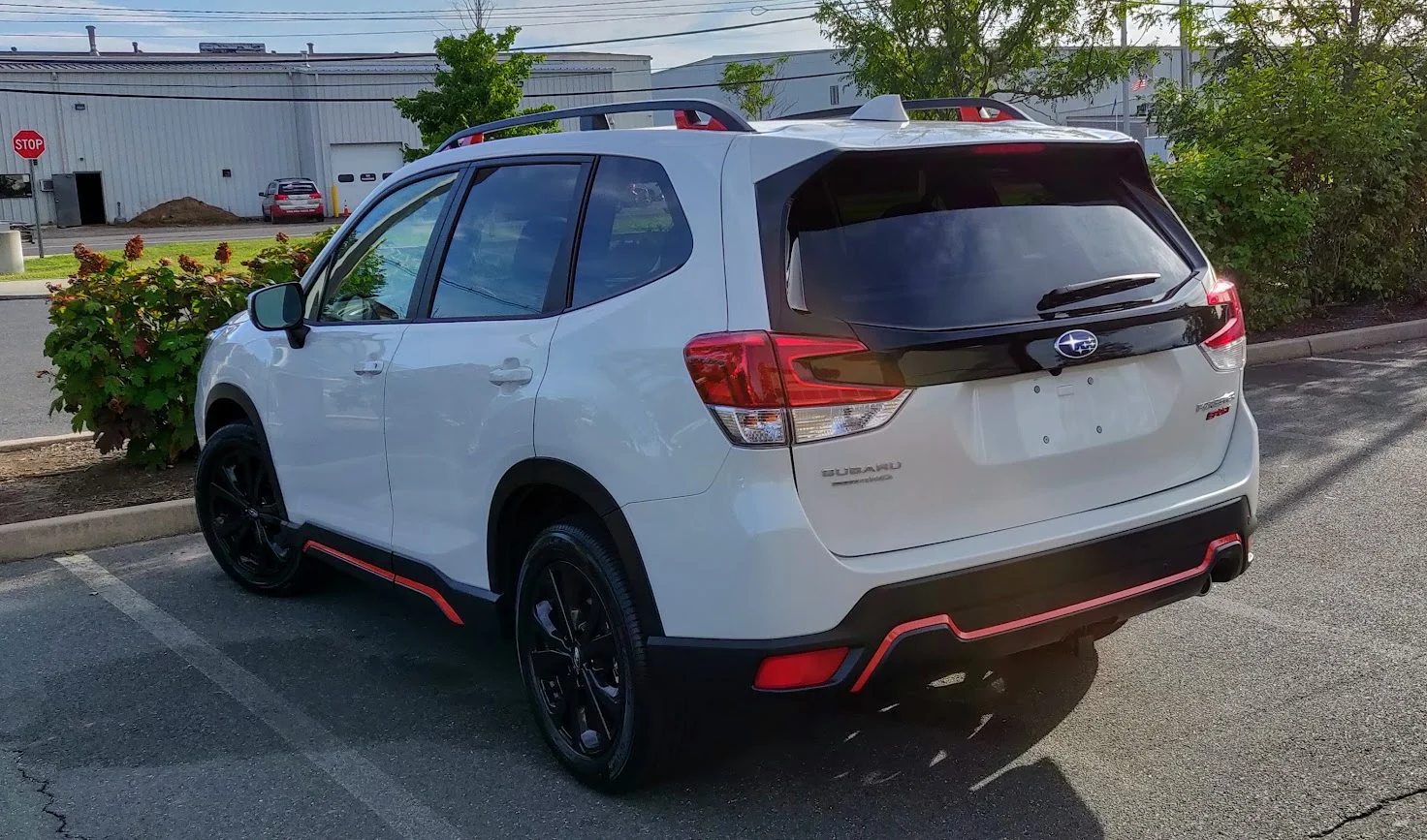
We just hit 120K miles on it and my son and I have done most of the maintenance —
brakes twice, CVT fluid once, diff changes twice. We hired out the brake fluid change. That's
pretty much it. It's been a solid car. And it also followed the Jeep off the snowstorm-covered lawn this past
weekend (with a little preventative shoveling from my wife) with barely a struggle. I thought
it would be fine, but figured there was maybe a 50/50 chance we'd end up digging it out. Nope.
Snow mode for the win, and maybe the Goodyear Assurance WeatherReady2 tires? They're not winter
tires, but they're pretty stellar.
The Next Generation
A father-son project, and another VW Beetle in the garage
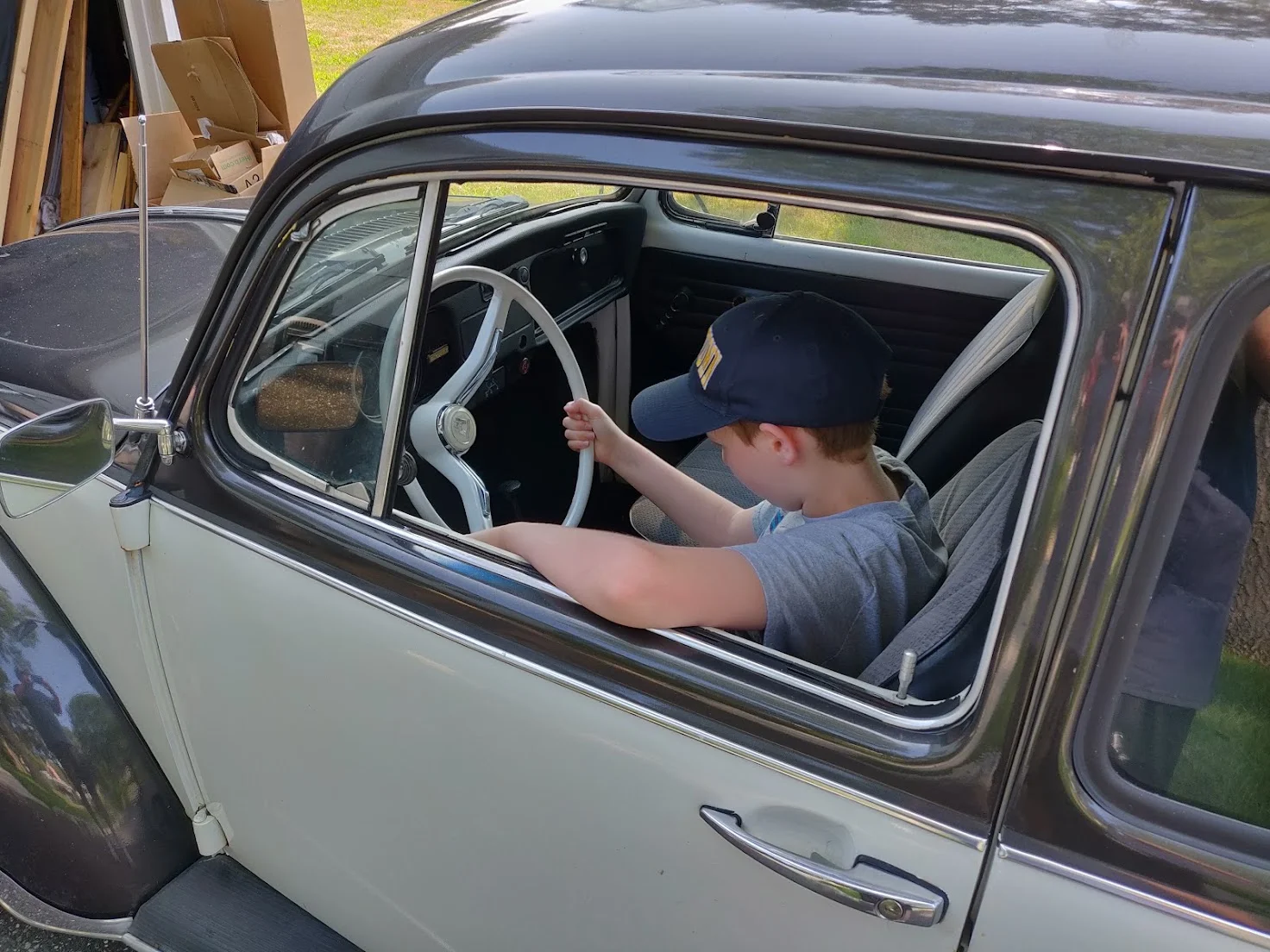
Around this time, my son started getting into cars, and wanted to get into a project of our
own. My dad bought us a '71 Super Beetle that was solid, but that needed quite a bit of mechanical
attention. I figured it doesn't get more simple than an aircooled Beetle, and it would be a
great starting point for him. We have a separate site for that —
vwsuperbaja.com
— that details the progress we've made on it (or lack thereof). We just completed
tearing the engine down and are about to rebuild it — just as soon as the weather gets a
little warmer. It's been a crazy cold and snowy winter in New York this year.
One More Saab
Grandpa's 9-5, passed down to the next generation
In between getting the Beetle and disassembling the engine (a period of about five or six
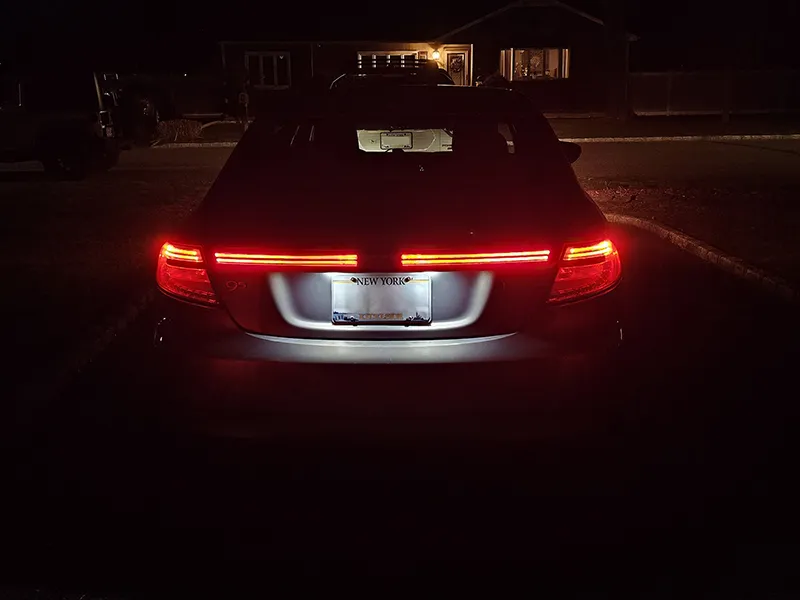
years?), my son turned 16, and my dad was ready to turn over the 2011 Saab 9-5 Turbo4 he had
bought during Spyker's closeout days. We got it to New York and replaced the brakes, fixed the
rear light bar, and changed all the fluids. It's been to Saabs@Carlisle twice now, and my son
has done a bunch of audio work on it. He says he wants to keep it as long as he can, but it's
fighting the same fight all New York daily drivers do — the rust battle. It's a sweet
cruiser though. Driving the Wrangler every day, I sort of forgot how much I loved driving a
nice, solid, European automobile.
The Deer Incident
A Subaru, two deer, and a rental that changed everything
In late February of 2025, my wife was driving the Forester on a local divided highway when two
deer ran across the divider and smacked into the side of it. She said when she stopped, they
were gone. We brought the car to the body shop, and they said they were going to have it a
while. In the meantime, we needed to get a rental. USAA's top tier of auto reimbursement is
$30 a day, which doesn't get you much on Long Island. I asked my wife if she thought she could
adjust to a Bolt, which was the cheapest car at Hertz that wasn't a subcompact. She said sure,
let's try it.
When we got to Hertz, all they had was an EV6 (Wind RWD), which was fine with me as I had
really liked the one my stepson and daughter-in-law had rented when we had visited them in
California. When my wife got in it to drive it home, I was worried it would be too different
for her, but she made it back safely and we both eventually got to really love it. Within a
few days, she was trying out the iPedal mode, and two weeks in, I knew we had bought our last
gasoline-powered car. I got our electrician to wire me up a NEMA 6-20 off the garage subpanel,
and I bought a Webasto TurboCord off eBay and we started charging at home.
Eventually the call came that our Subaru was all fixed. Much as I loved the Subaru, I really
didn't want to give up the EV6. I don't think my wife did either, but she's cautious of
talking poorly of Suby behind its back, so I can't be sure. I just knew at some point, I
wanted one of my own, and wasn't sure how I was going to make that happen.
Goodbye, Wrangler
Eleven months of waiting, and a last road trip to Concord
Over the next eleven months, I kept my eye on used EV6 prices. Due to the ICCU issues, there
were plenty of buybacks, but I was a little leery of buying one because most of the Carfax
reports and dealer explanations didn't specifically mention the ICCU. They'd mention range
complaints, alignment problems, or other issues that could really have been anything. If I could
have found one that I knew had been bought back solely for the ICCU issue, I would likely have
bought it, especially at the prices they were selling for — in the low $20K range.
Every month or so I'd think about selling the Wrangler and picking up an EV6. I was the only
one in the family who could drive the Jeep, and when the Forester was out of commission for a
few more days getting a new set of shoes and about $4K of shock, strut, control arm, and rear
bearing work, it became clear to me that my family would be better served by something any one
of us could drive when needed. But it sure had been nice not having a car payment for so long.
I listed the Jeep at a high price I knew no one would bite at, just to see if someone did. I
only listed it on cars.com and got a few bites, but nothing solid. I kept driving the Jeep and
kept looking at used EV6 prices.
One day while scrolling through one of the Jeep forums on Reddit, I saw a post from someone
asking for their thoughts on a used Wrangler for sale. It was a pre-Pentastar, so pretty much
everyone had said “pass” on it. I added that OP should make sure the rockers had already
been done on whatever Pentastar-equipped vehicle they got, because it was a common issue with
aging Wranglers. I mentioned that if he was at all interested in a 2-door 6-speed, I'd sell
him mine, as I was looking for something that worked better for the family.
One month later, I drove the Jeep for one last road trip up to Concord, MA to drop it off at
its new owner's house. Prior to selling it, the local Jeep guy went over it for the new owner
and recommended a new radiator and hoses as well as a new steering kit. It's safe to say the
Jeep drove better on that last trip than it had in years after the work was done.
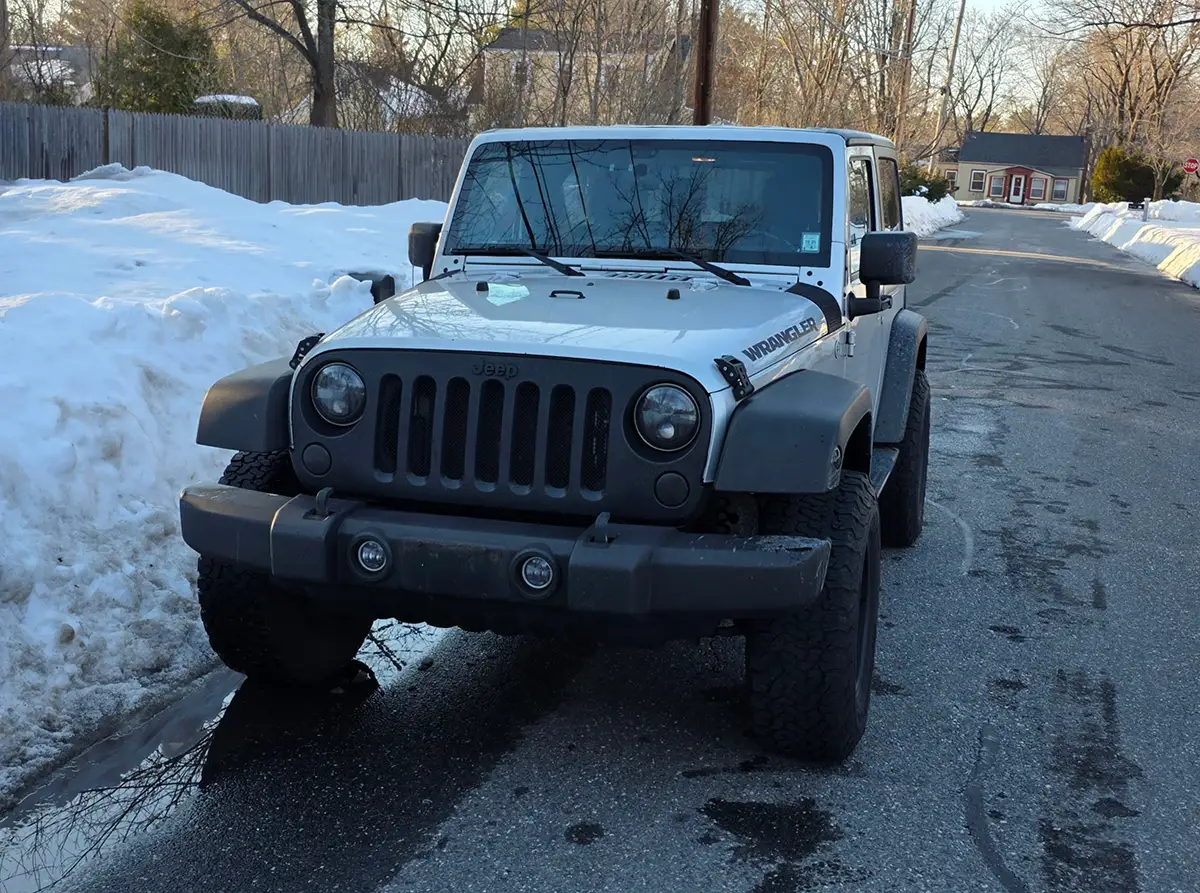
Last pic of my old friend, just before I said goodbye.
The day was sunny and warm, and it was a fitting send-off for my trusted friend. I will
probably miss it more than any vehicle I've sold to date. It was cheap to maintain, easy to
work on, had never stranded me, and had always gotten me anywhere I needed to go. When I
first bought it, I don't think I ever thought I'd grow to love it as much as my TJ or my
first CJ, but it really was one of the best vehicles — if not the best vehicle —
I've ever owned.
The Jeep's new owner dropped me off at the MBTA Commuter Rail, and I headed to South Station
to take a Dartmouth Coach up to NH to see my Dad and his partner for the weekend. It felt
weird that I was no longer a Jeep owner — something I had been for the last sixteen
years. After a wonderful but short visit, Dad dropped me off at the Claremont Amtrak station,
and after a six-hour ride to Penn Station and another hour and a half on the LIRR out to Long
Island, I was back home. It was time to get my family's first EV.
More to come
This page is a work in progress. The journey continues.
↑